Wall-Mounted, Countertop or Floor-Standing: Choosing a Vending Machine Format
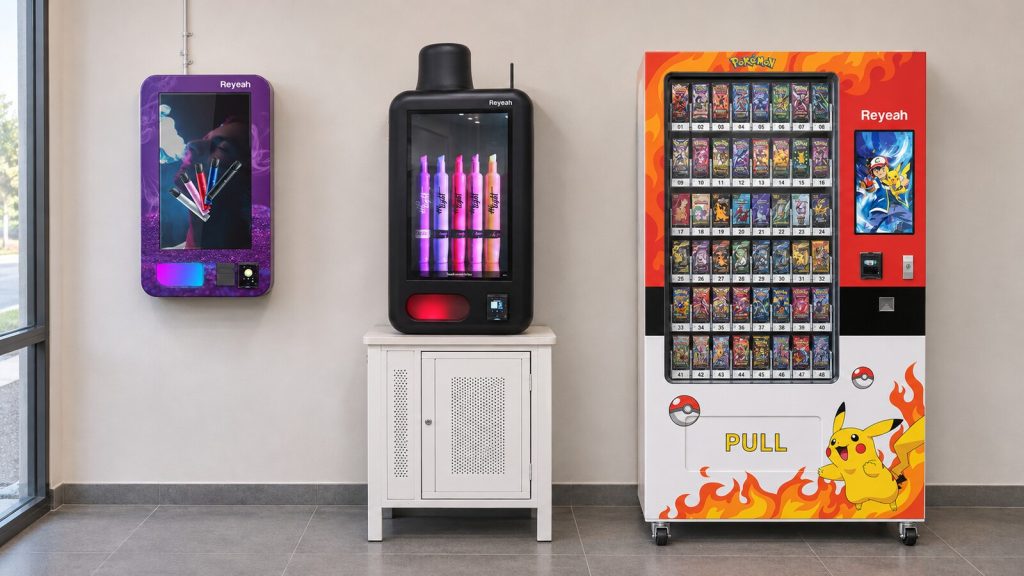
When floor space is expensive, a wall-mounted machine can look like an obvious choice. Yet a floor-standing cabinet may be easier to refill, and a countertop unit may be easier to relocate during a trial. Comparing these vending machine formats means looking at how the location works throughout the day.
Start by watching the space. Where do customers stop? Where does a queue form? Which route does the cleaner use? A machine needs a place to be used and serviced, not merely a rectangle it can occupy.
Wall-mounted machines need a suitable wall
Wall mounting can preserve floor space, but it transfers the installation problem to the building. Obtain the machine’s loaded weight, mounting drawing and required service clearances before agreeing to a position.
Have the wall and fixing method assessed by a qualified installer. A lightweight partition, an uneven surface or concealed services may require another approach. Landlord permission can also be necessary. Do not assume that a supplied bracket settles all of these questions.
Height matters after installation. Customers need to see the product information, use the payment reader and retrieve their purchase comfortably. Check the applicable accessibility requirements for the site rather than placing the cabinet wherever it looks most tidy.
Countertop machines compete with working space
A countertop unit can suit a supervised reception or retail area where staff can check it regularly. The trade-off is that it takes space which may already be used for paperwork, customer service or other products.
Confirm the counter’s load capacity and the machine’s stability with its door open. Allow room for ventilation, cables and safe refilling. A machine that blocks sightlines or forces staff to move it every morning will quickly become an inconvenience.
Plan who is responsible for customers’ questions. Even if the machine is self-service, nearby staff may become the first point of contact for a failed payment or missing product.
Floor-standing cabinets need more than floor area
A floor-standing format can offer useful capacity and straightforward service access, but it still needs a suitable installation location. Check the delivery path, the surface, the door swing and any manufacturer-specified anchoring.
Ask to see the layout with your products loaded. A taller cabinet does not necessarily provide more useful capacity if much of its space is occupied by a large display, payment compartment or mechanism that does not suit your packaging.
Do not place the machine where its service door obstructs a normal route. Refilling should be possible without asking people to squeeze around boxes and an open cabinet.
Compare vending machine formats against the same brief
Use one product list and one operating schedule when requesting quotes. Otherwise, you may be comparing a basic ambient countertop unit with a refrigerated floor-standing machine that performs a different job.
A useful comparison should answer four questions: how many of each product fit, how often the machine needs refilling, how customers reach every control, and how a technician reaches the parts most likely to need attention. Record the answers instead of relying on labels such as “mini” or “medium.”
Payment and connectivity requirements also remain important at every size. A smaller machine still needs suitable power, a workable connection where required, and a payment arrangement supported in the destination market.
Trial the position before committing
Mark the proposed footprint and door swing on the floor or counter. Walk through the purchase and refill sequence with the venue manager. Check the location at a busy time, not only when the building is empty.
If a temporary installation is possible, agree how its performance will be assessed and what happens if it must move. A format decision becomes easier when it is tied to an actual product mix and service routine.
Send those measurements and a photograph of the proposed site with your enquiry. The most useful recommendation is one that explains why a particular cabinet fits that location, including its limitations.
If the standard formats do not fit the measured space, review custom vending machine options using the same product and servicing requirements.