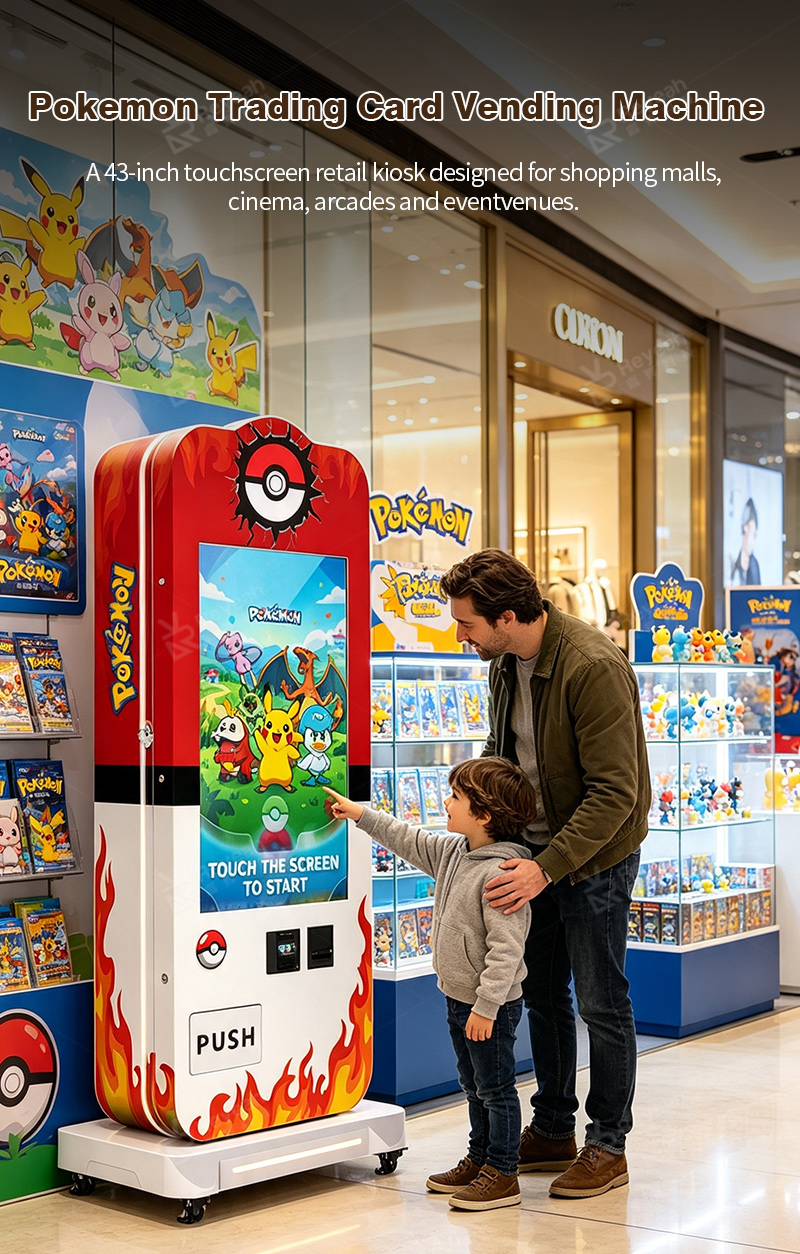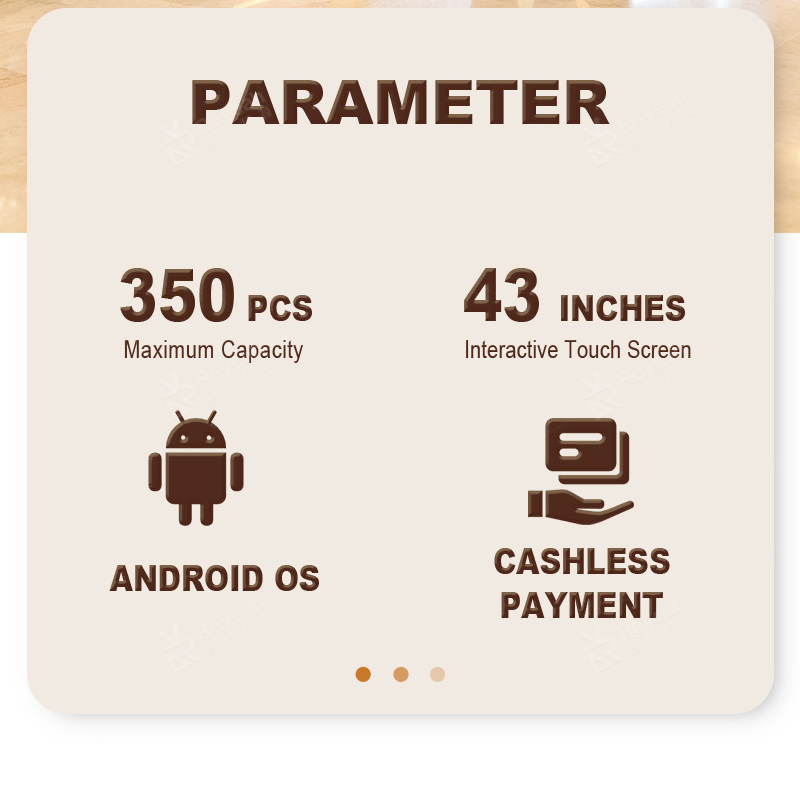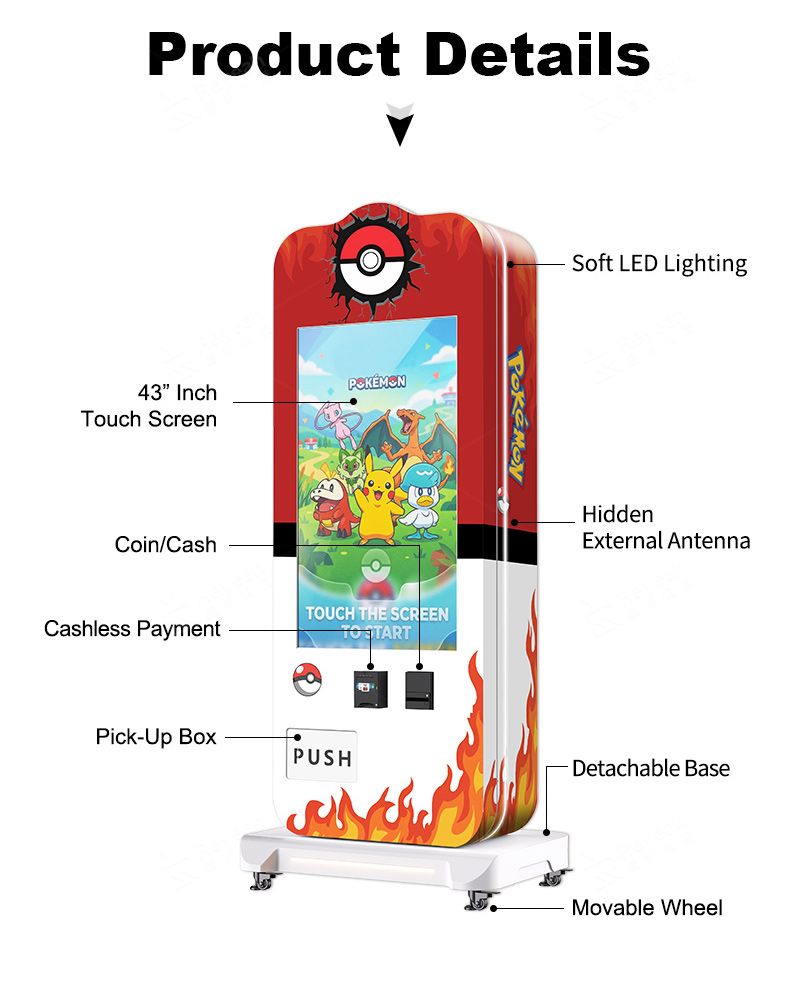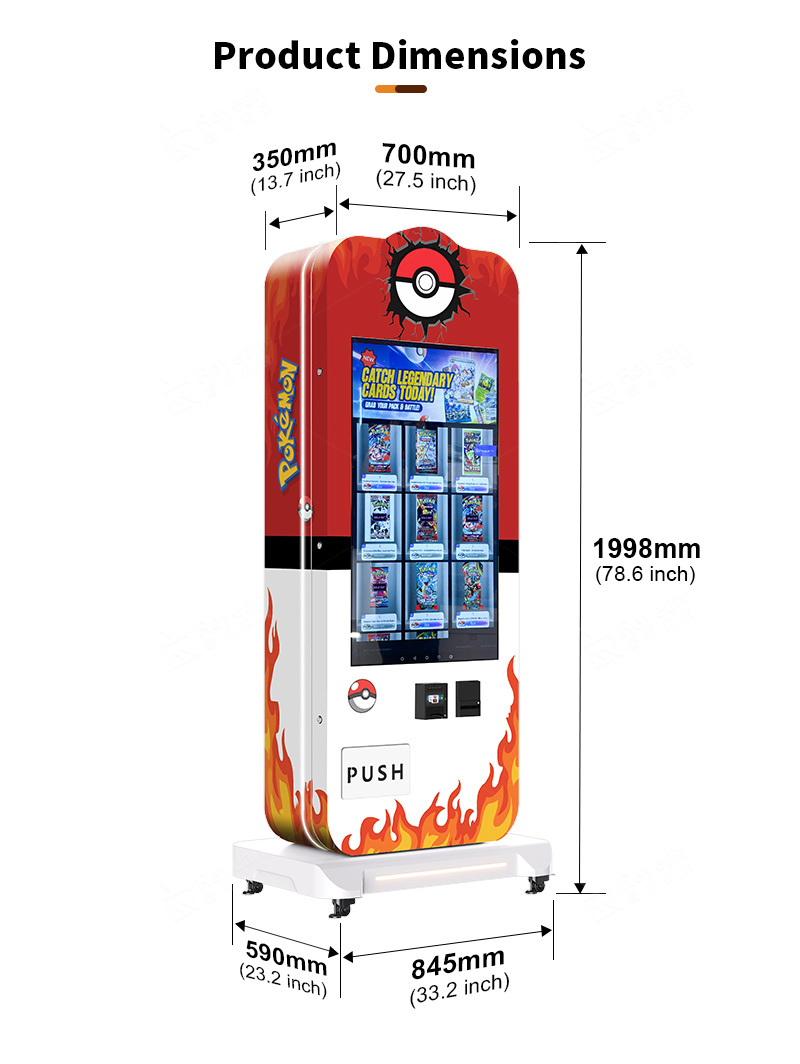
Product details
How to Start a Profitable TCG Vending Machine Business: Location, Setup and Revenue Guide
Trading cards have moved far beyond hobby shops and collector conventions. Today, Pokémon cards, sports cards, anime cards and other trading card games are purchased in shopping malls, game stores, supermarkets and entertainment venues around the world.
For operators, this creates an interesting opportunity: the TCG vending machine.
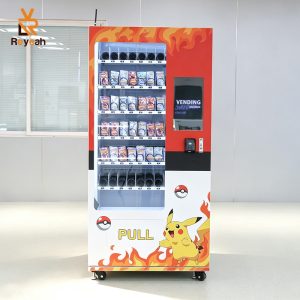
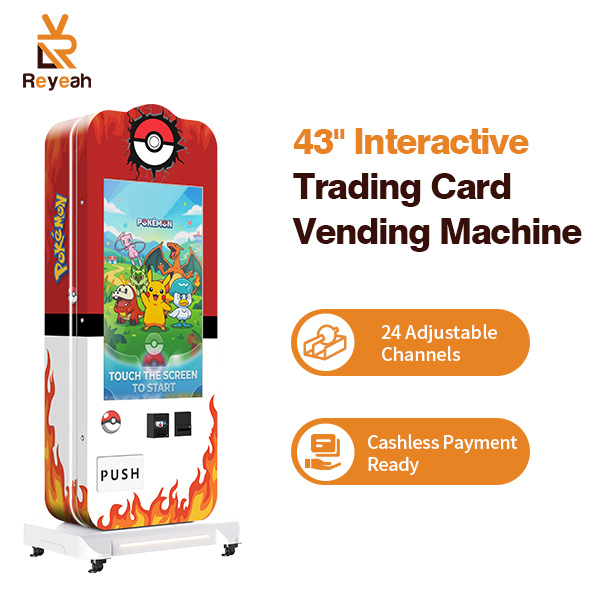
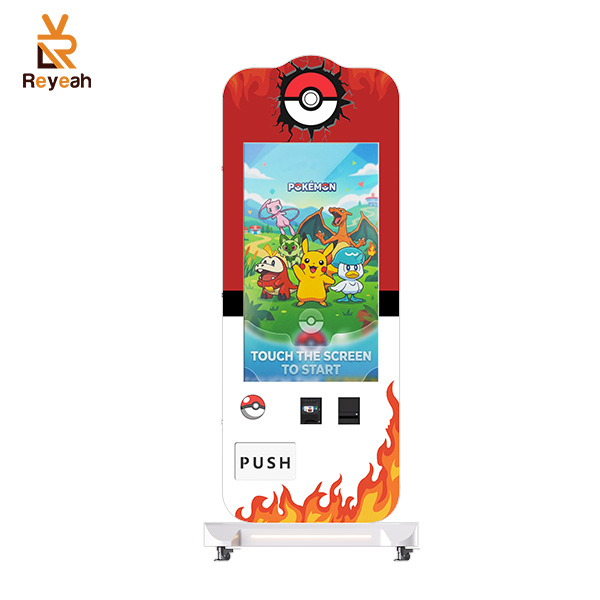
A well-placed Pokemon vending machine can sell booster packs, card sleeves, deck boxes and other collectibles throughout the day without requiring a dedicated salesperson. However, buying a machine and filling it with cards does not automatically make it profitable.
Location, product selection, machine configuration, pricing and restocking all play a role.
This guide looks at the practical side of starting and operating a TCG vending machine business.
What Is a TCG Vending Machine?
A TCG vending machine is an automated retail machine designed to sell trading card products such as:
- Pokémon booster packs
- Pokémon booster boxes
- Sports trading cards
- Yu-Gi-Oh! cards
- One Piece cards
- Magic: The Gathering products
- Card sleeves
- Deck boxes
- Top loaders
- Small collectible products
Unlike a traditional snack vending machine, a machine selling trading cards needs to accommodate products with different shapes and values.
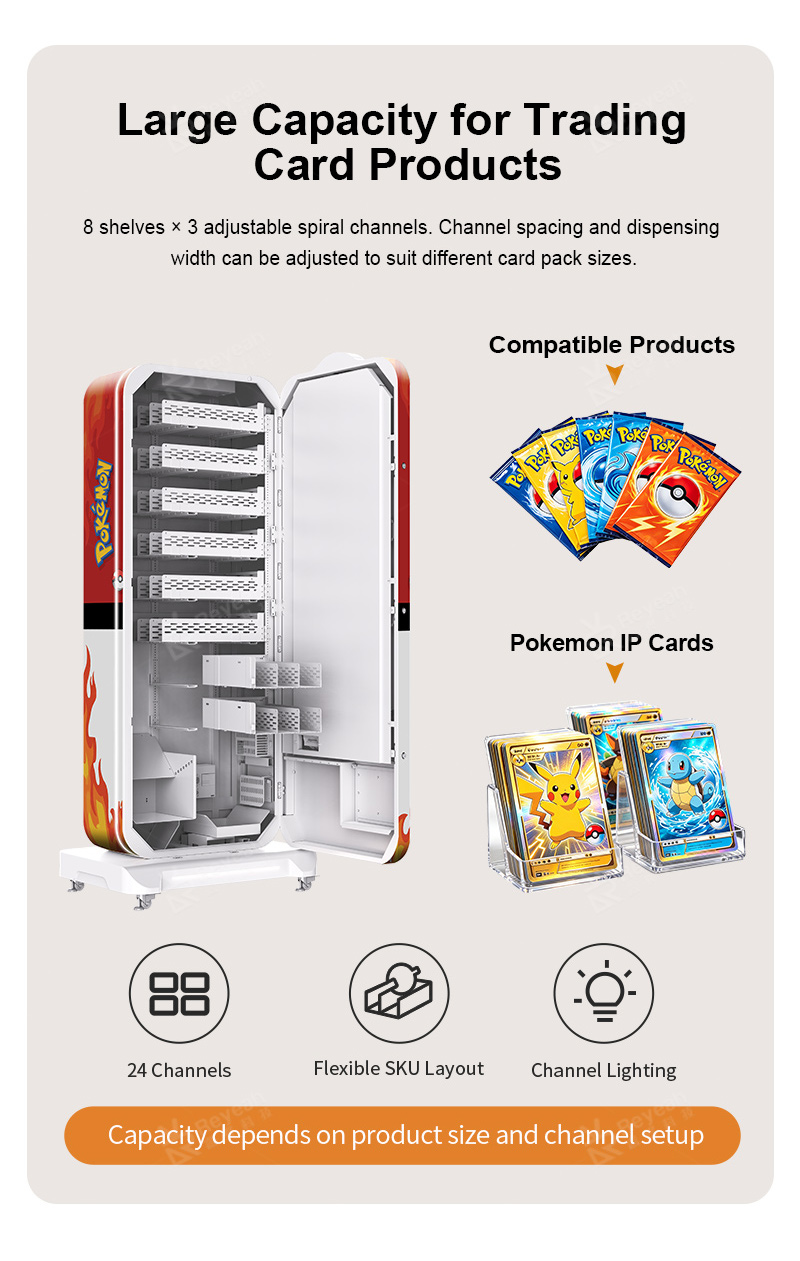
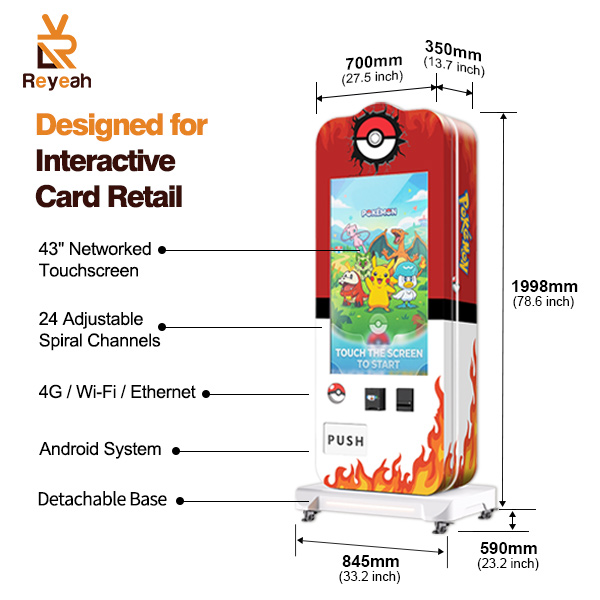
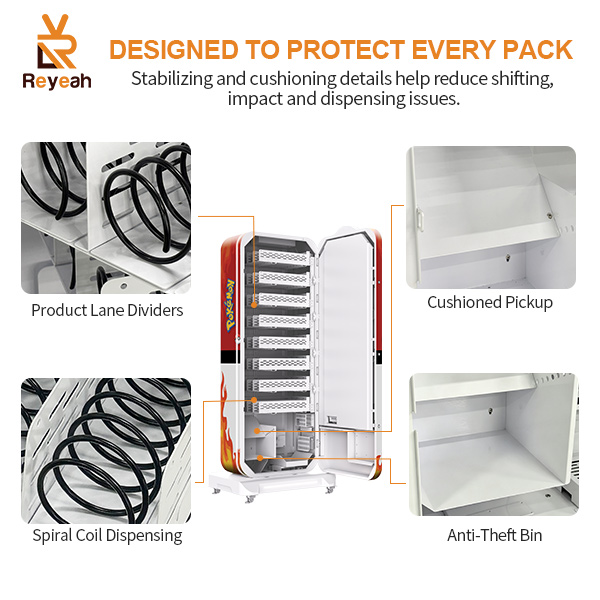
A single booster pack is thin and lightweight, while a boxed card product can be considerably larger. The machine therefore needs a suitable dispensing system and adjustable product channels.
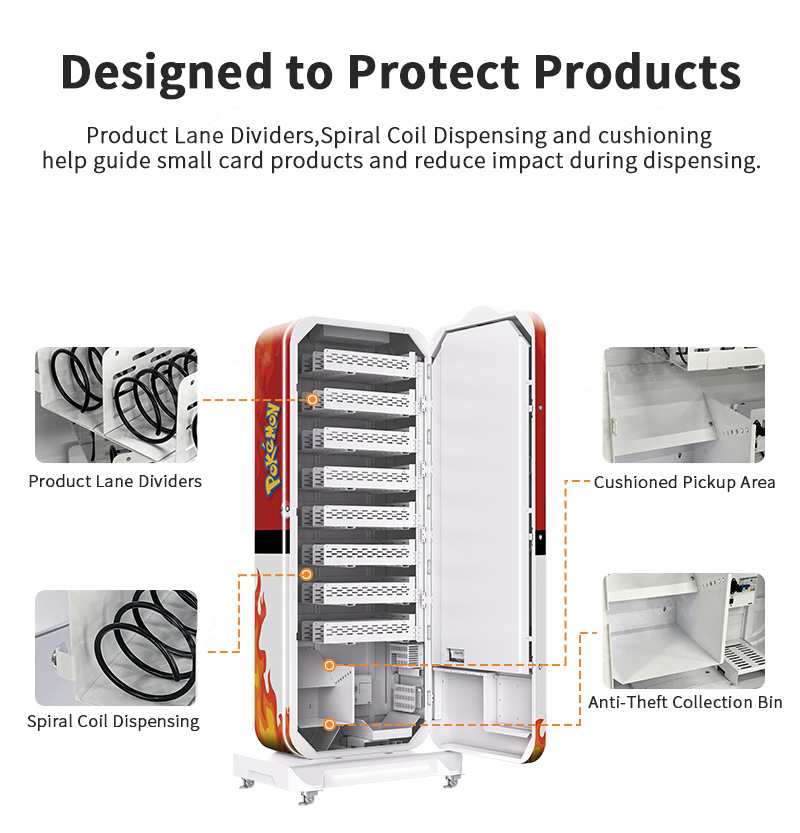
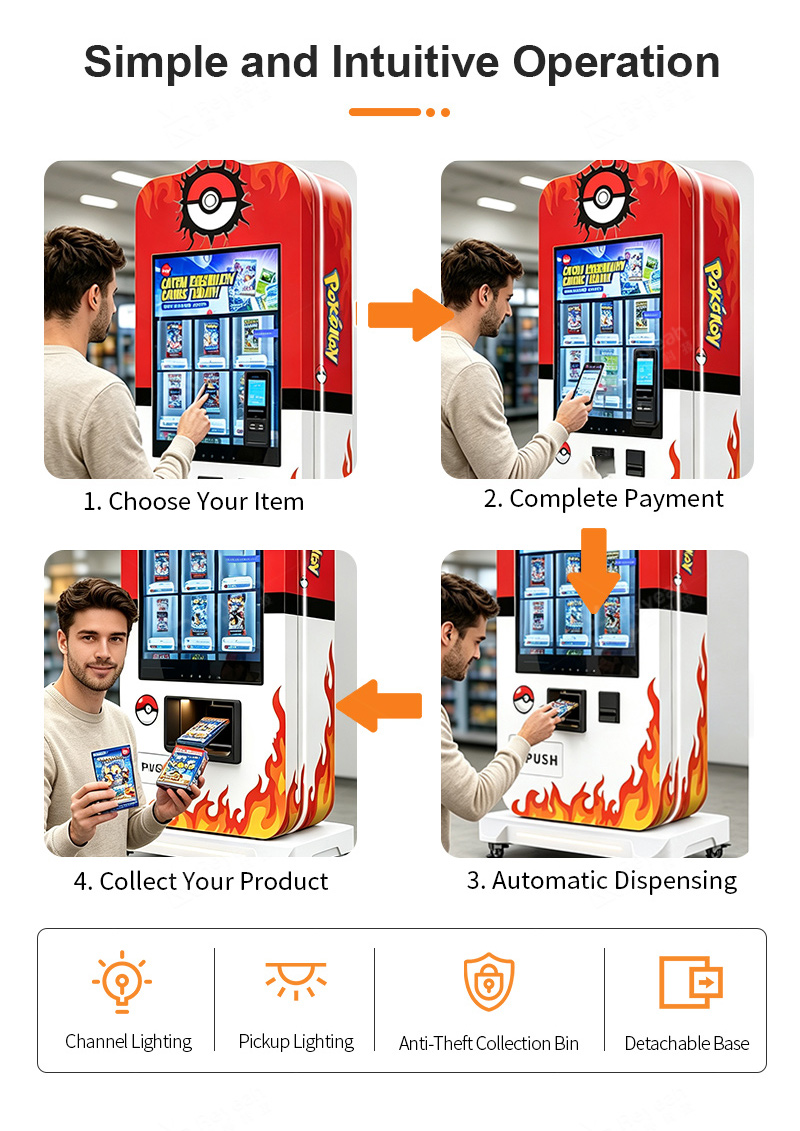
For operators selling higher-value products, security is equally important. A good machine should make it difficult for customers to reach into the delivery area and remove products without payment.
Why Trading Cards Work Well in Vending Machines
Trading cards have several characteristics that make them suitable for automated retail.
First, the products are relatively compact. A machine can carry a large number of booster packs without requiring much floor space.
Second, many purchases are impulsive.
Someone may not travel to a shopping mall specifically to buy a Pokémon booster pack, but if they see a brightly designed machine while walking past an arcade or cinema, they may decide to buy one.
This is particularly true for younger collectors and existing TCG players.
Third, the products do not require refrigeration or complicated storage conditions. Compared with food and beverage vending, daily maintenance is relatively simple.
The challenge is not keeping the products fresh. The challenge is putting the right cards in the right location.
Location Is the Most Important Decision
A vending machine is essentially a small automated retail store. If there is little relevant foot traffic around it, even an attractive machine will struggle.
For a Pokemon card vending machine, total foot traffic is useful, but targeted foot traffic is more important.
A location with 5,000 visitors interested in gaming, anime and collectibles may perform better than a location with 20,000 visitors who have little interest in trading cards.
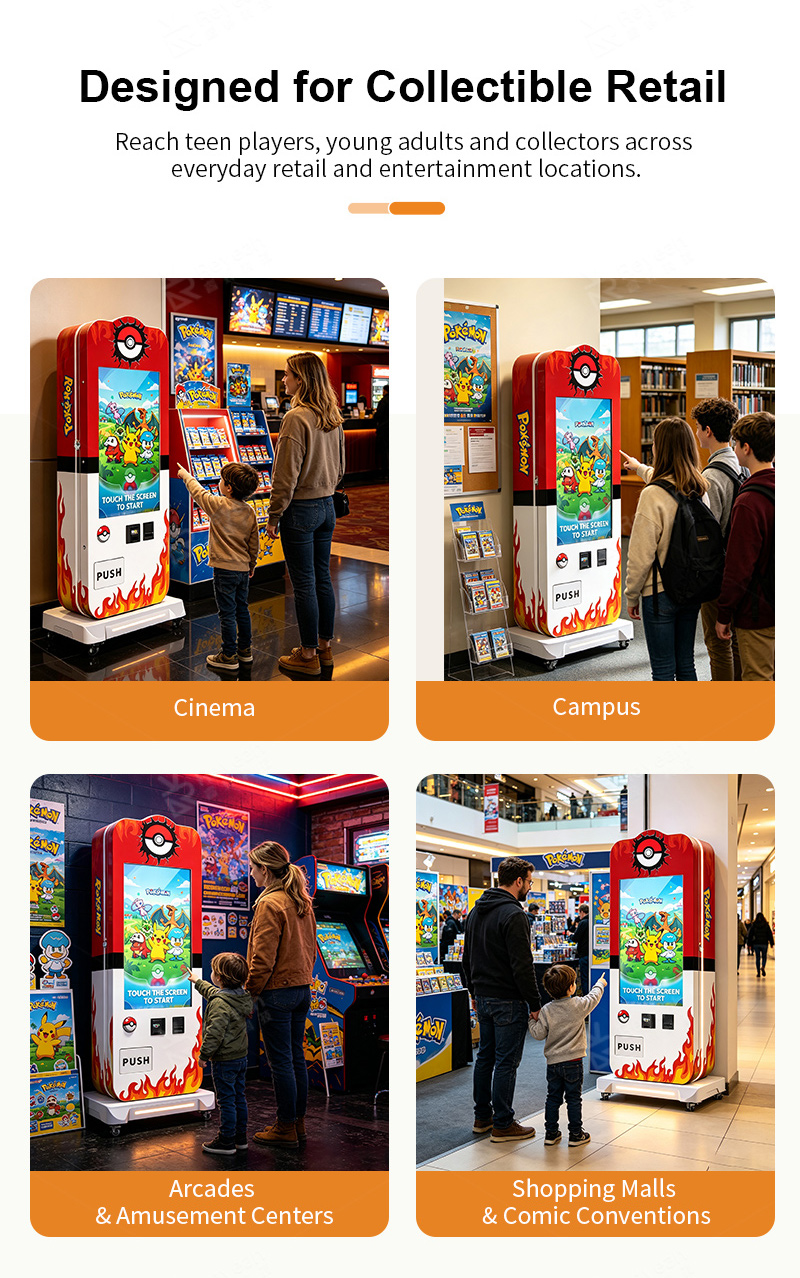
Shopping Malls
Shopping malls are one of the most obvious locations.
The machine can be positioned near:
- Cinemas
- Arcades
- Toy stores
- Game stores
- Food courts
- Family entertainment areas
- Escalators
- Main entrances
Visibility matters.
Avoid putting the machine in an isolated corner simply because the rent is cheaper. Customers should be able to see the machine naturally while moving through the building.
Game Stores and Hobby Shops
It may sound unusual to install a vending machine close to a store that already sells cards, but the two can complement each other.
For example, the vending machine can operate when the store is closed or provide quick access to lower-priced products without requiring staff assistance.
Some stores can also use the machine outside their entrance as a form of 24-hour retail.
Arcades and Entertainment Centers
Arcades attract exactly the type of customers who are likely to understand Pokémon, anime and collectible products.
Customers are already in an entertainment mindset, which can improve impulse purchases.
Bowling centers, indoor playgrounds, gaming cafés and family entertainment centers can offer similar opportunities.
Universities and Campuses
Depending on local demographics, universities can also be worth testing.
TCG collecting is not limited to children. Many Pokémon and Magic: The Gathering collectors are adults with disposable income.
The key is to understand the actual audience rather than assuming that every campus will perform equally well.
How to Evaluate a Location Before Installing the Machine
Before signing a long-term agreement, spend some time observing the location.
Look at the site during different periods:
Weekday morning:
Who passes the location?
Weekday evening:
Does traffic increase after school or work?
Weekend:
Are there more families, teenagers or young adults?
Also check whether customers naturally stop in the area.
A corridor where everyone walks quickly toward an exit may have high traffic but poor vending performance. An arcade entrance where people regularly wait for friends may have lower traffic but much better conversion.
A practical operator should evaluate:
Foot traffic × target customer percentage × conversion rate × average order value
rather than looking at foot traffic alone.
Choosing the Right TCG Vending Machine
The machine should be selected according to the products you intend to sell.
If the main product is individual booster packs, the dispensing mechanism must reliably handle thin packages.
Cards should not become stuck between the product channel and delivery area.
For larger products, adjustable channels are useful because they allow operators to change the product mix without replacing the entire machine.
A typical machine may combine several product types:
| Product | Typical Role |
|---|---|
| Booster Packs | Main sales volume |
| Premium Booster Packs | Higher margin |
| Booster Boxes | High-value purchase |
| Card Sleeves | Accessory sales |
| Deck Boxes | Accessory sales |
| Top Loaders | Add-on purchase |
| Mystery Packs | Impulse purchase |
This creates different price points inside one machine.
Instead of asking every customer to spend $20 or $50, the machine can serve someone who only wants one booster pack as well as a serious collector looking for a premium product.
Payment Methods Matter
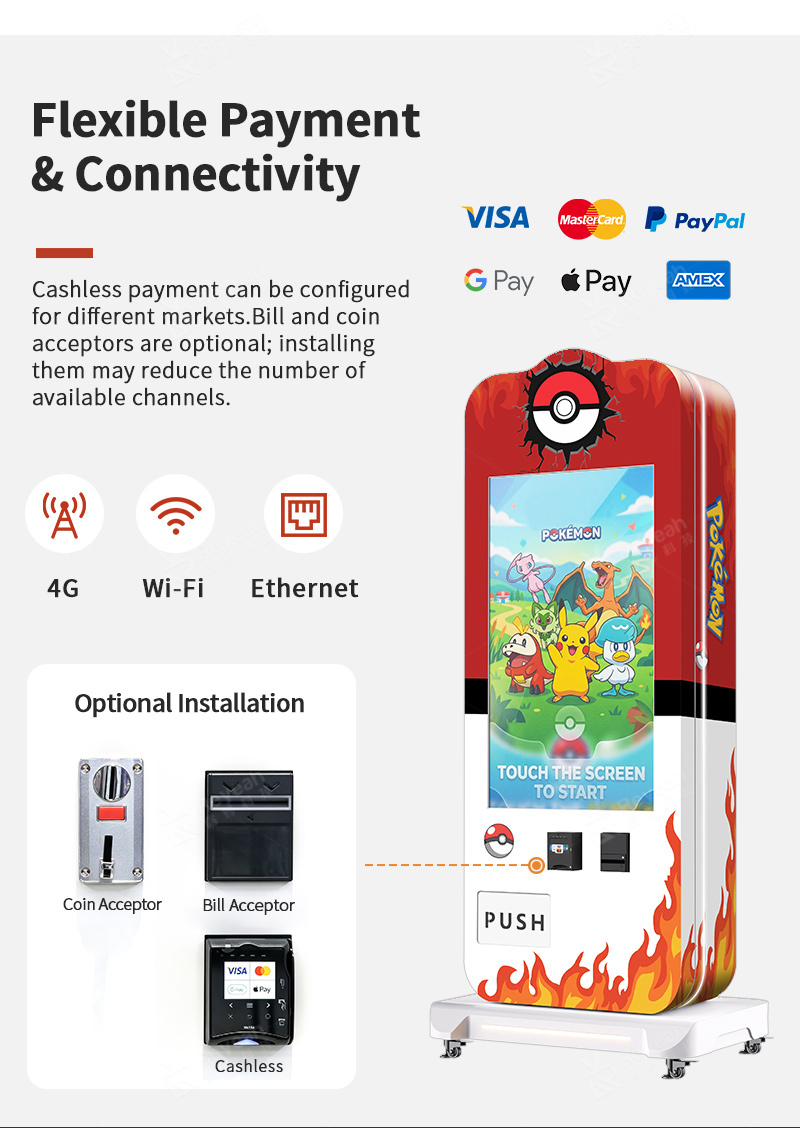
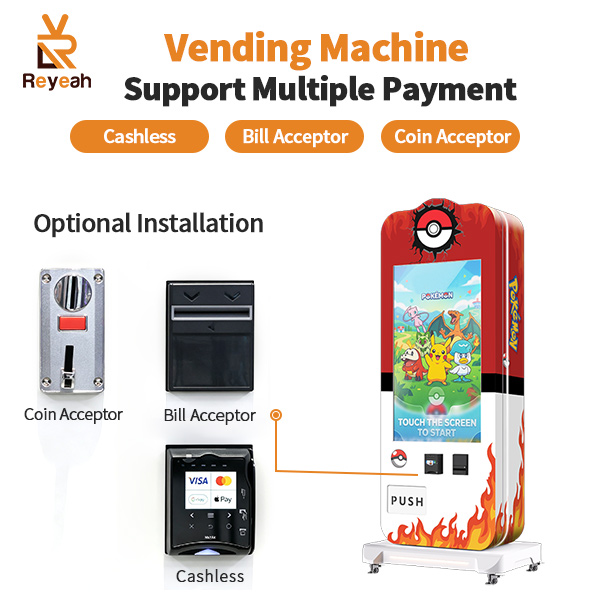
A modern TCG vending machine should generally support cashless payment.
Depending on the country, this may include:
- Credit cards
- Debit cards
- Contactless cards
- Apple Pay
- Google Pay
- QR payments
- Local payment systems
Collectors often make spontaneous purchases, so unnecessary payment friction can directly reduce sales.
If a customer sees a Pokémon pack they want but cannot use their preferred payment method, the sale may simply disappear.
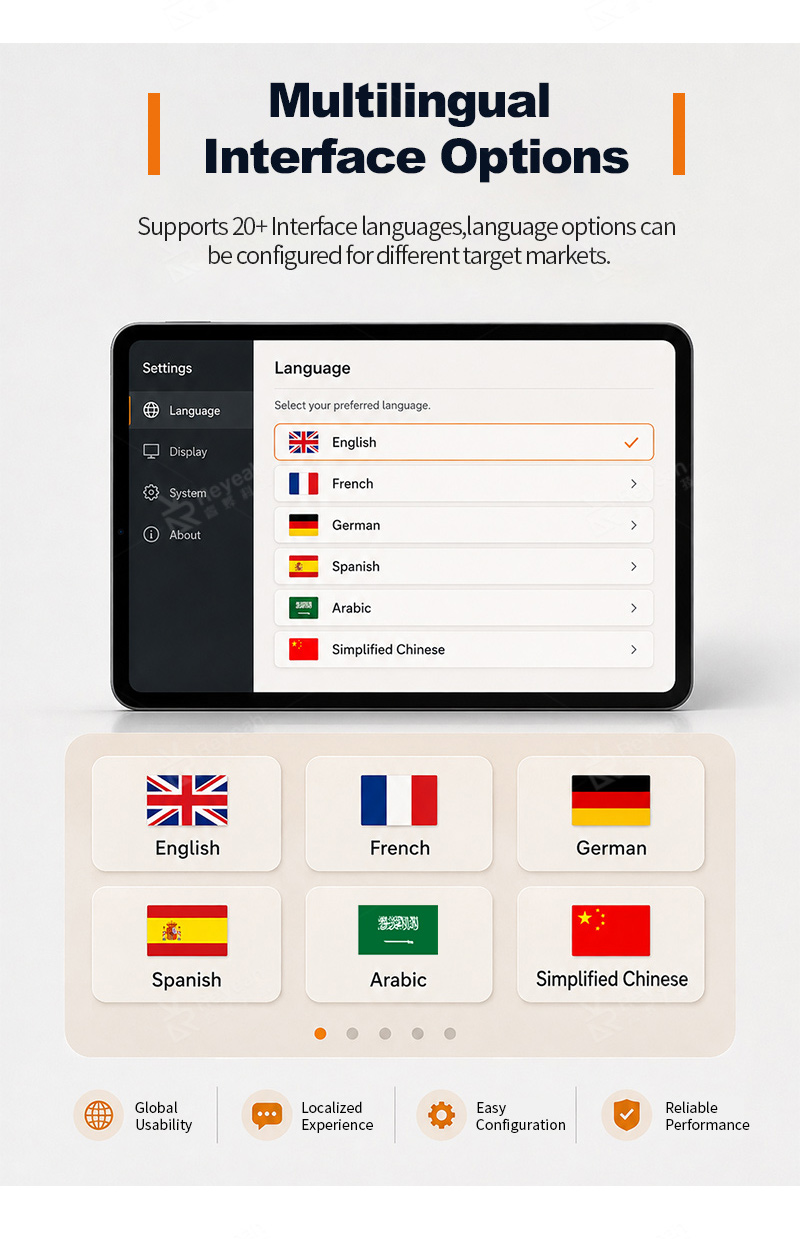
For operators deploying machines internationally, the payment terminal should be selected according to the local market rather than using the same configuration everywhere.
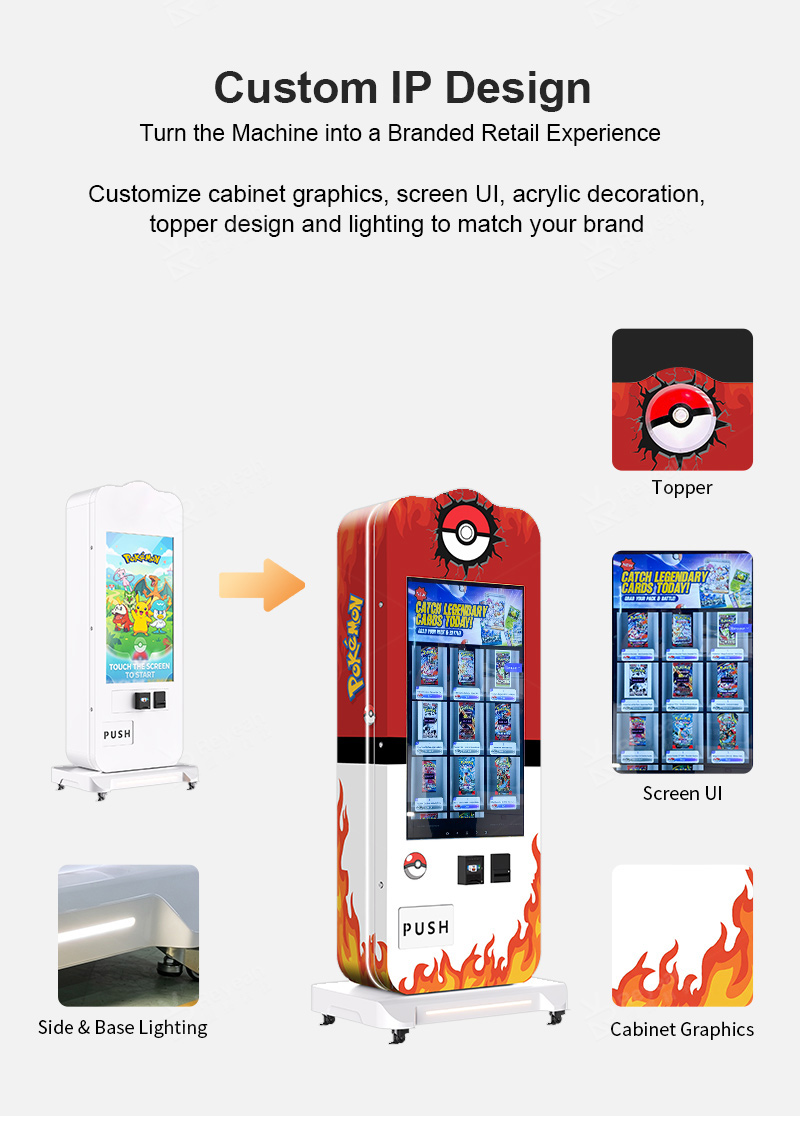
Machine Appearance Can Influence Sales
A TCG vending machine is not only a dispensing device. It is also a large advertising display.
A plain white cabinet selling Pokémon cards may work, but a well-designed machine will attract significantly more attention.
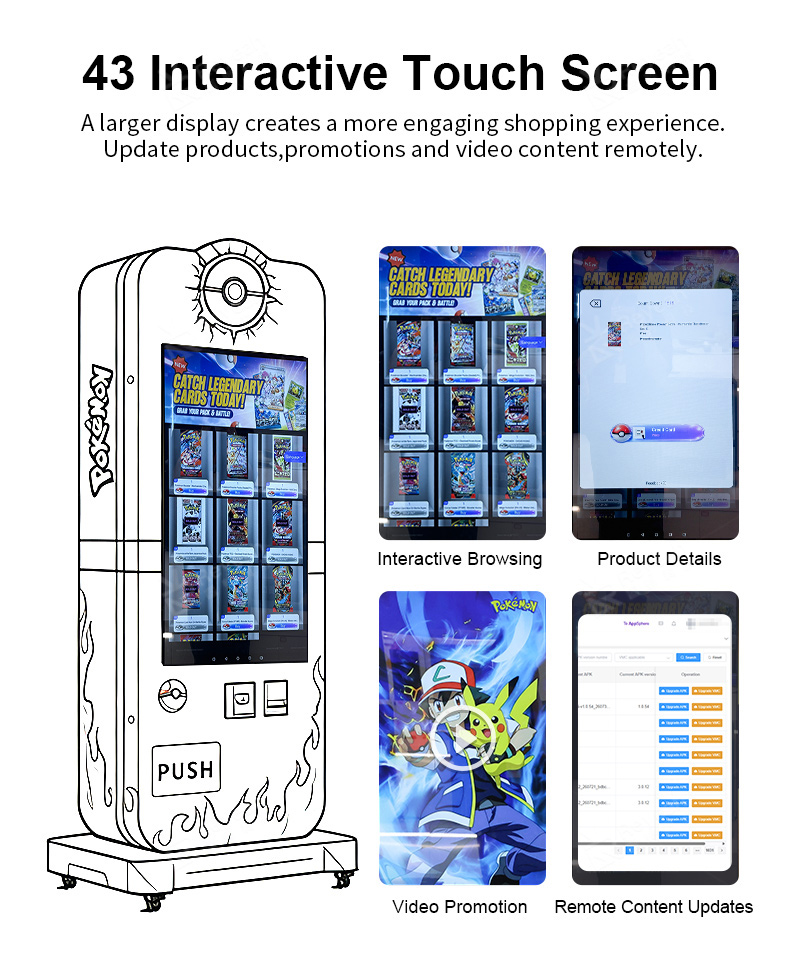
Use clear product images, strong lighting and an easy-to-understand touchscreen interface.
From several meters away, customers should immediately understand what the machine sells.
However, operators should also pay attention to intellectual property and branding rights when using Pokémon characters, logos or other copyrighted artwork commercially.
A machine can sell Pokémon products without necessarily being an official Pokémon-branded vending machine.
This distinction is important when designing the cabinet and advertising the business.
Deployment: What Happens After You Find a Location?
Once a location has been selected, deployment should be planned carefully.
The first step is confirming the available space.
Measure:
- Machine width
- Machine depth
- Machine height
- Door opening clearance
- Customer standing area
- Power outlet distance
- Network availability
Do not measure only the physical footprint of the machine.
There must also be enough room to open the machine for restocking and maintenance.
The second consideration is power and internet access.
Most modern vending machines require continuous electricity, while remote management and cashless payment normally require network connectivity through Wi-Fi, Ethernet or 4G.
The third consideration is security.
For indoor installations, positioning the machine within CCTV coverage is preferable. Outdoor installations require additional consideration for waterproofing, temperature, sunlight and physical security.
Start With One Location Before Expanding
One common mistake is purchasing many machines before proving the business model.
A better approach is to test one or two machines first.
Operate them for several months and record:
- Daily sales
- Weekly sales
- Best-selling SKUs
- Slow-moving SKUs
- Average transaction value
- Restocking frequency
- Payment method usage
- Location commission
- Maintenance costs
This information becomes much more valuable when deciding where to place the next ten machines.
A profitable vending operation is usually built through repeated testing rather than guessing.
How Does a Pokemon Vending Machine Make Money?
The basic calculation is straightforward:
Revenue = Number of Transactions × Average Transaction Value
But revenue is not profit.
An operator also needs to subtract:
Product cost + location rent/commission + payment fees + restocking cost + machine depreciation + maintenance + other operating expenses
Consider a simple example.
Suppose a machine averages 20 transactions per day with an average transaction value of $8.
Daily revenue would be:
20 × $8 = $160
Over 30 days:
$160 × 30 = $4,800
That does not mean the operator earns $4,800.
If the gross margin after purchasing the cards is 35%, the gross profit before other operating expenses would be:
$4,800 × 35% = $1,680
From this amount, the operator still needs to deduct location fees, payment processing, transportation, maintenance and other costs.
This is why a machine with impressive sales numbers is not necessarily a profitable machine.
Location Commission vs. Fixed Rent
There are generally two common arrangements with location owners.
Fixed Monthly Rent
You pay a fixed amount every month regardless of sales.
This arrangement can be attractive when you already know the location performs well.
However, it increases risk during the testing stage.
Revenue Sharing
The property owner receives a percentage of sales.
For example, if monthly sales are $5,000 and the agreed commission is 10%, the location receives $500.
Revenue sharing reduces the operator’s downside when sales are weak, which can make it suitable for testing new locations.
The best structure depends on traffic, negotiating power and expected sales.
Inventory Turnover Is More Important Than Filling Every Slot
A common mistake is trying to make the machine look completely full with as many different products as possible.
More SKUs do not automatically mean more sales.
If three Pokémon sets generate 70% of your revenue, giving those products more capacity may be more profitable than filling the machine with slow-moving products.
Monitor sales data and adjust the product layout regularly.
For example:
Fast-selling products: increase capacity.
High-margin products: give them better screen visibility.
Slow-moving products: reduce stock or replace them.
New releases: test them quickly while market interest is high.
Trading card demand changes rapidly, especially around new releases. Inventory management therefore has a direct impact on profitability.
Avoid Tying Too Much Cash Up in Inventory
TCG products can be expensive.
If you operate ten machines and place thousands of dollars of inventory in each machine, a large amount of working capital can become tied up.
Operators should therefore balance availability with turnover.
A machine does not need three months of stock sitting inside it if the operator can restock every week.
The objective is not maximum inventory.
The objective is maximum return from the available inventory.
Use Data to Plan Restocking
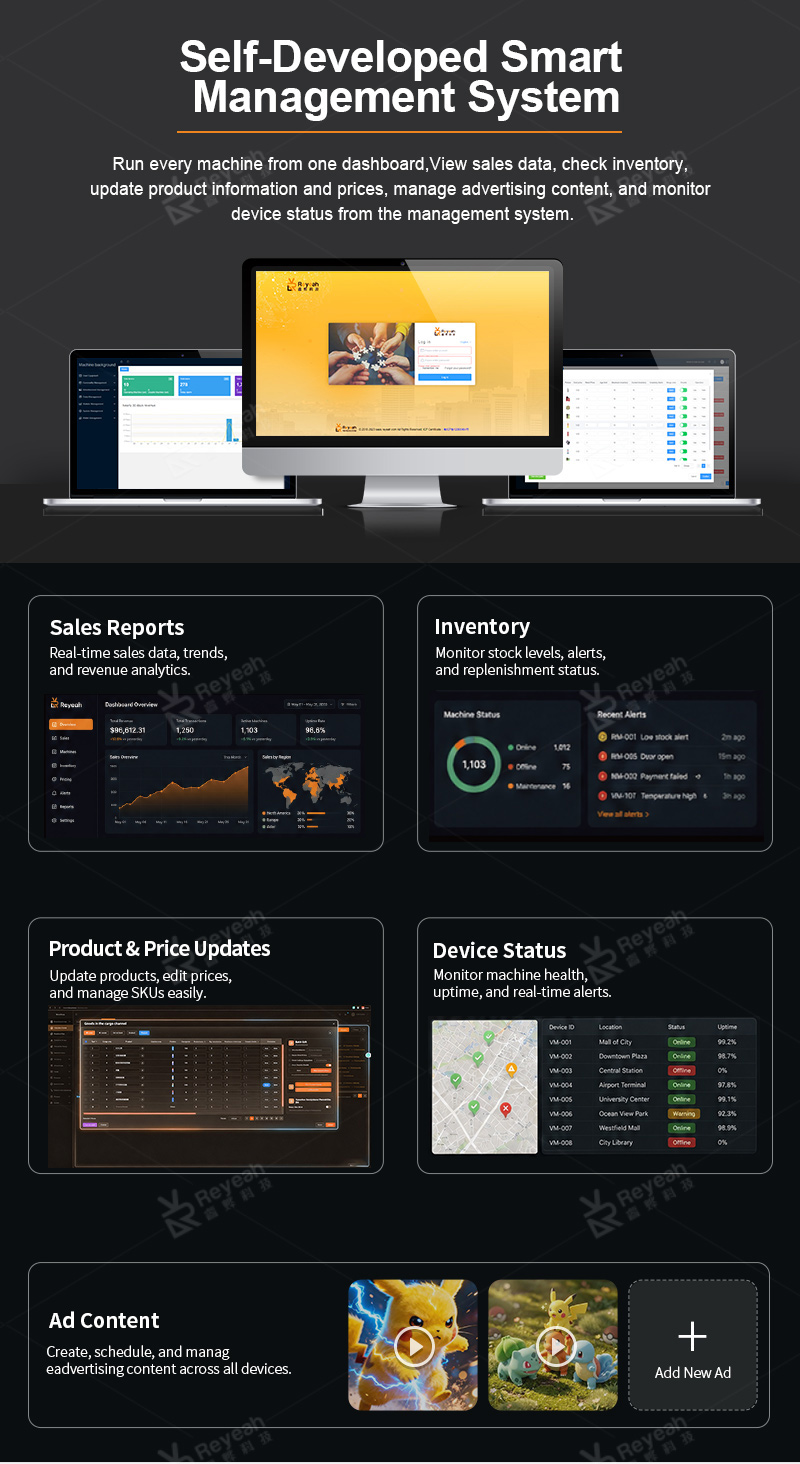
Remote vending management can make multi-machine operations much easier.
Instead of driving to every location to check inventory manually, operators can use the machine’s backend system to monitor sales and stock levels.
For example, if Machine A has sold 80% of its Pokémon booster packs but Machine B has sold only 20%, the operator knows where to restock first.
This becomes increasingly important when the business grows from two machines to twenty or fifty machines.
At that stage, route planning and inventory management can have a meaningful impact on operating costs.
Product Releases Create Sales Opportunities
TCG vending is different from ordinary snack vending because demand can change dramatically when a new set is released.
Collectors often want new products immediately.
Operators who can stock popular releases quickly may experience significantly higher sales during the first days or weeks after launch.
This makes supplier relationships important.
A good location without desirable products will not perform to its full potential.
The vending machine solves the retail problem, but the operator still needs a reliable supply chain.
How to Improve Profit Per Location
There are several ways to improve the economics of an existing machine before looking for another location.
First, increase the average transaction value.
Instead of selling only individual packs, offer products at several price levels.
For example:
- Entry-level booster pack
- Multi-pack bundle
- Premium pack
- Booster box
- Accessories
Second, improve the product mix.
Replace products that occupy space but rarely sell.
Third, improve visibility.
Sometimes moving the same machine 20 meters closer to an arcade entrance can make a noticeable difference.
Fourth, negotiate the location fee after you have real sales data.
Finally, reduce unnecessary restocking trips by monitoring inventory remotely.
Small operational improvements can compound over time.
When Should You Add a Second Machine?
Do not expand simply because the first machine has sales.
Expand when you understand why it has sales.
If the first location performs well because it is next to a busy arcade, look for other locations with similar customer profiles.
If Pokémon booster packs account for most of the revenue, configure the next machine around that information.
The goal is to create a repeatable model.
For example:
Target location: shopping malls with cinemas and arcades
Target customer: teenagers, families and young adults
Main product: Pokémon booster packs
Secondary products: premium packs and accessories
Payment: cashless
Restocking: once or twice per week
Once the model is clear, expansion becomes much more systematic.
Final Thoughts
A TCG vending machine can turn a small amount of floor space into an automated trading card retail point, but the machine itself is only one part of the business.
Successful operators pay close attention to location quality, customer demographics, product selection, inventory turnover, payment methods and operating costs.
For a Pokemon vending machine, the strongest locations are usually those where collectors, gamers, families and younger customers already spend time.
Start with a manageable number of machines, collect real sales data and optimize the operation before expanding.
The most important question is not:
“How many machines can I install?”
It is:
“Can I find a location and product mix that I can profitably repeat?”
Once the answer is yes, a single TCG vending machine can become the starting point for a much larger automated retail network.