Managing a TCG Vending Machine Through New Releases and Quiet Weeks
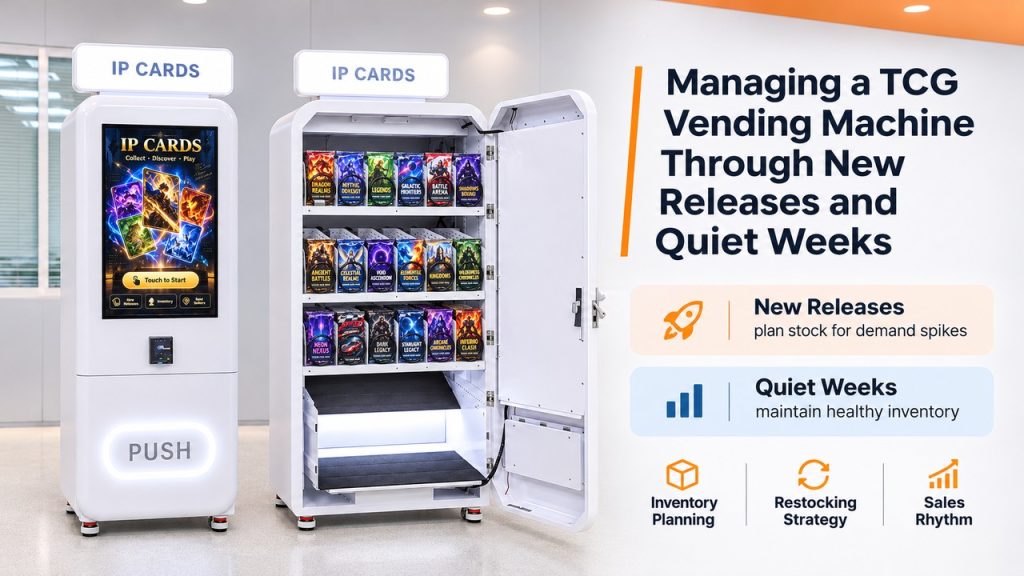
TCG vending machine restocking gets harder around a new release, when a few busy days can make demand look stronger than it is. A product sells quickly for a few days, the operator orders heavily, and the following weeks are much quieter. The machine has not necessarily failed; the stock plan may simply have treated a short event as normal demand.
A useful assortment separates dependable stock from short-term experiments. That gives customers a consistent selection while allowing the operator to respond to new products.
Give every lane a job
Decide which products form the regular range and which lanes are for trials. A core item should earn its position through observed demand and dependable supply. A trial lane should have a review date and a clear reason for being there.
Accessories can serve a different purpose from boosters, but they still need their own demand evidence and dispensing tests. Do not fill remaining space with unrelated items just to make the cabinet look busy.
Keep the selection readable. Similar product images with unclear language or pack counts make browsing harder, particularly on a small screen.
Separate release-week demand from routine TCG restocking
Label launch periods in the sales record. Compare them with ordinary weeks rather than averaging everything into one daily figure. Note when a product was unavailable, since a sell-out hides the demand that arrived afterwards.
A hypothetical product might sell 30 packs during a release weekend and eight during the following weekday period. That does not justify assuming 15 sales every day. Reorder decisions need to reflect the remaining demand, the next delivery date and the quantity already on hand.
The same discipline applies to tournaments, holidays and local events. A temporary boost is useful, but it is not evidence that the location will perform at that level all year.
Review cash tied up in stock
A lane full of expensive boxes may have a high retail value while generating few transactions. Track how long stock remains unsold as well as its potential margin.
For a straightforward stock-cover measure, divide units on hand by average daily sales from a representative period. If sales are too irregular for that average to be useful, review the dated transaction history directly. Do not force a precise-looking forecast from a handful of purchases.
Set an internal review point for slow items. Options may include reducing the quantity allocated to the machine, returning stock where supplier terms allow, or moving it to another legitimate sales channel. Avoid buying additional stock merely because the previous order remains unsold.
Keep replenishment within a tested setup
Changing a product can change how it dispenses. A new box size, a different blister tab or a revised sleeve needs a fit check before entering a lane previously used for another item.
Update the product image, price, language and quantity description at the same time as the physical stock. If a technician replaces stock first and someone updates the screen later, the customer may buy one item and receive another.
Use a refill record that shows who changed the lane and when. A quick photograph of the completed loading arrangement is useful when resolving later questions.
Judge the site after ordinary weeks
Look beyond revenue. Track the products available, completed deliveries, refunds, refill time and the remaining stock value. A machine that sells well but requires repeated emergency visits may need more capacity or a simpler assortment.
The existing Pokémon vending location guide discusses potential venues. Once a site is operating, its actual purchase pattern is more useful than the venue category alone.
Choose a review period long enough to include normal trading days, then make one or two changes and observe the result. The aim is a range that customers can rely on and an inventory commitment the operator can explain, even after the excitement of a release has passed.