Pokémon and TCG Vending Machines: How to Test Packs, Blisters and Boxes
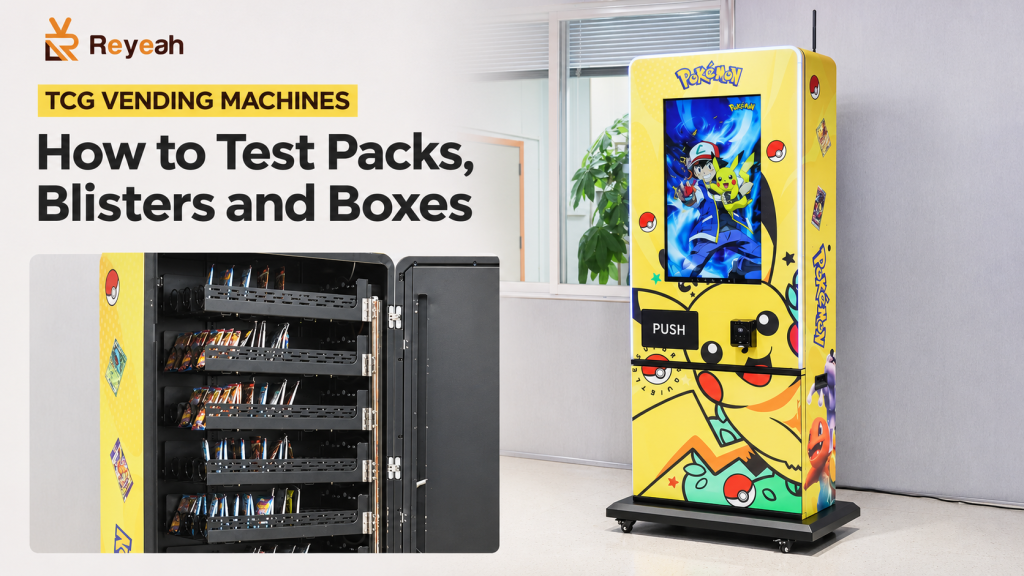
In a TCG vending machine, a booster pack reaching the collection tray is only half a successful delivery. The customer also expects an intact seal, clean corners and packaging that has not been trapped or scuffed inside the machine. Collectors may care about condition even when the cards themselves are undamaged.
For a Pokémon or other trading card game vending project, test the exact retail formats you intend to stock. “Suitable for cards” is too broad a specification.
Check TCG vending machine fit for each packaging format
Loose foil packs, cardboard-sleeved boosters, hanging blisters and small boxes do not behave alike. A flexible pack may bend around a guide. A blister’s hanging tab may catch. A box can rotate as it leaves a lane.
Measure the finished retail item, including seams and tabs. Note the weight, flexibility and intended orientation. If an outer sleeve is proposed to improve handling, test that sleeve too and make sure customers can understand what they are purchasing.
Do not assume that two sets from the same trading card brand share identical packaging. A new format or supplier packaging change should trigger another fit check.
Follow the complete delivery path
Watch the product leave its storage position, move through the mechanism and arrive in the collection area. Look for contact points that could bend a corner, scrape printed packaging or trap a sealed edge.
An elevator or controlled delivery tray may reduce a fall, but its name alone proves little. The product must enter, remain stable on and leave that mechanism correctly. Ask for video that includes the whole movement instead of a close-up of the final successful drop.
Inspect delivered products under ordinary lighting. Photograph marks and compare them with an undelivered sample from the same batch. Agree in advance which defects are unacceptable.
Repeat the test as stock runs down
Fully loaded lanes and nearly empty lanes can behave differently. Include first, middle and last-item deliveries in the test. Record the product, lane setup, starting quantity and outcome for each run.
Count failed deliveries, double deliveries, visible damage and manual interventions separately. A test that succeeds only after someone adjusts the stock between attempts does not represent unattended operation.
There is no universal number of test cycles that guarantees reliability. Choose a meaningful trial with the supplier, include the awkward products, and extend it when a fault appears. The aim is to expose problems before shipment rather than produce a flattering demonstration.
Make the screen match the product
A correct delivery can still disappoint if the listing is unclear. Identify the game, set, language, pack format and quantity included in the purchase. Show the packaging that will actually be dispensed.
Avoid implying that a random booster contains a particular valuable card. Where individual artwork varies within the same product, explain that clearly. Do not mix different languages or formats in one lane unless the selection and description accurately reflect what the buyer will receive.
The product image should help someone identify the item. It should not create expectations the machine cannot fulfil.
Keep a repeatable loading record
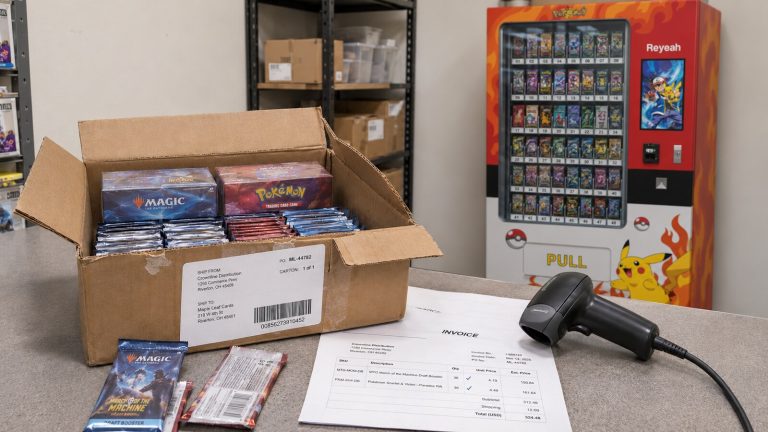
Once a configuration passes testing, save photographs of the lane, divider positions, product orientation and maximum fill level. Give refill staff a short reference sheet. Overfilling or reversing a pack can undo a setup that worked at the factory.
Keep stock protected from moisture, direct sun and unnecessary handling. Ask for the machine’s specified operating environment before placing collectible products near an exposed entrance.
For equipment enquiries, send a mixed sample set and request a documented loading trial. The D13 product page is a starting point for discussing a card-vending project; compatibility should still be confirmed with your own packaging.
Independent equipment for selling trading cards should not be described as an official Pokémon vending machine unless that relationship has actually been established.