Privacy Questions Raised by Age Verification in Vape Vending Machines
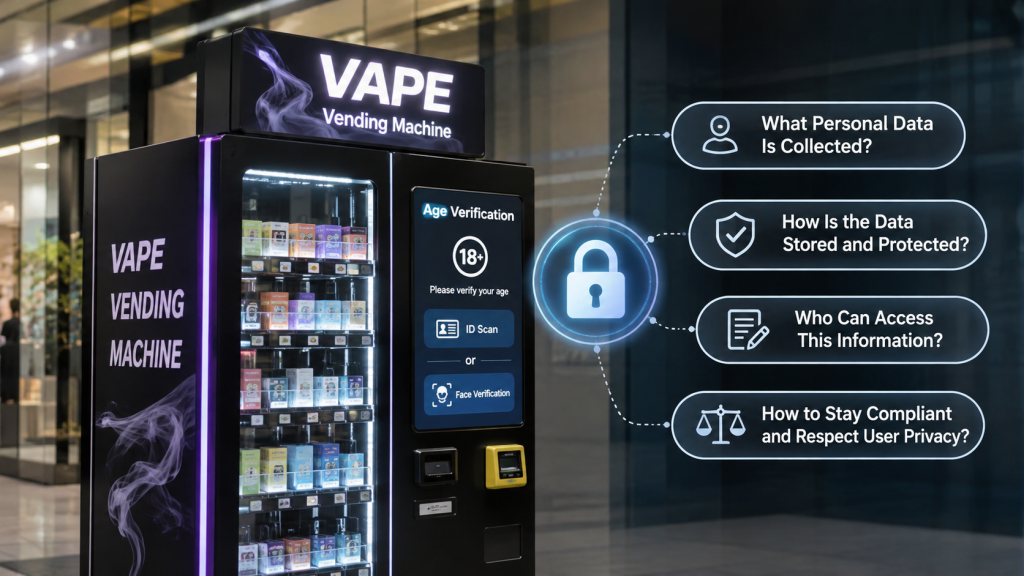
Vape vending age verification can involve information far more sensitive than the price of a purchase. Depending on the design, a system might handle a document image, a date of birth, a face image or a simple result confirming that an age threshold has been met.
Those are different kinds of data with different consequences. A responsible discussion of vape vending technology should explain the distinction rather than describe every method as a harmless scan.
Map the data used in vape vending age verification
Ask for a plain-language account of what the system collects and where each item goes. Does processing happen inside the device, through a verification provider or through several services? What remains after the check finishes?
The answer should distinguish temporary processing from retained records. Saying that an image is “used only for verification” does not establish whether a copy is stored, logged or included in backups.
A useful review follows one attempted check from beginning to end. It identifies the parties receiving information and the reason each party needs it. Where the supplier cannot provide that explanation, the uncertainty itself needs resolving.
Question whether the full identity is necessary
The UK Information Commissioner’s Office discusses proportionality and data minimisation in its age-assurance guidance for the Children’s Code. That guidance concerns online services and should not be presented as automatic approval of a physical vending system. It nevertheless raises a useful review question: can the purpose be met with less personal information?
Where a system only needs to establish an age threshold, ask why other identity details would be retained. A decision about necessary information must account for the applicable legal duties; it should not default to keeping everything because storage is inexpensive.
Identity information should not quietly become a customer-marketing database. Any additional use requires its own assessment rather than being hidden inside the age-check process.
Separate document checks from biometric processing
A camera being present does not, by itself, tell you what analysis takes place. Reading document details, comparing faces and estimating age are different functions. Ask which ones are actually enabled.
If face images or biometric processing are involved, obtain a specific privacy and legal assessment for the proposed use. Do not rely on a generic statement that the system is “encrypted” or “GDPR ready.” Security measures and lawful processing are related but separate questions.
The customer notice should describe the real process in understandable terms. It should not require a customer to infer what happens from a logo on the reader.
Check access, retention and deletion
Identify which staff and providers can see retained information. Shared administrator accounts make responsibility difficult to trace. Access should reflect a defined job, and access changes should be recorded when staff or service providers change.
Ask for the retention schedule and the reason for each period. Check whether deletion covers operational records, exported files and backups under the relevant policy. A delete button on a dashboard may not describe the complete process.
The same questions matter when equipment is transferred, retired or returned for repair. Responsibility for removing data should be established before a device leaves the operator’s control.
Provide a route for privacy concerns
Customers need to know whom to contact about their information. That contact should be able to explain the processing and route requests to the appropriate organisation.
Prepare an incident-response process before there is a lost device, exposed account or supplier security problem. Legal notification duties and response deadlines depend on the jurisdiction and circumstances, so they require specific review.
Privacy safeguards do not establish that vape vending is legally permitted at a location. They address a separate question: whether an age-assurance process handles personal information responsibly. Both issues need an answer, and neither should be reduced to a marketing claim.