Small Vending Machine Buying Guide: Start With the Products, Not the Cabinet
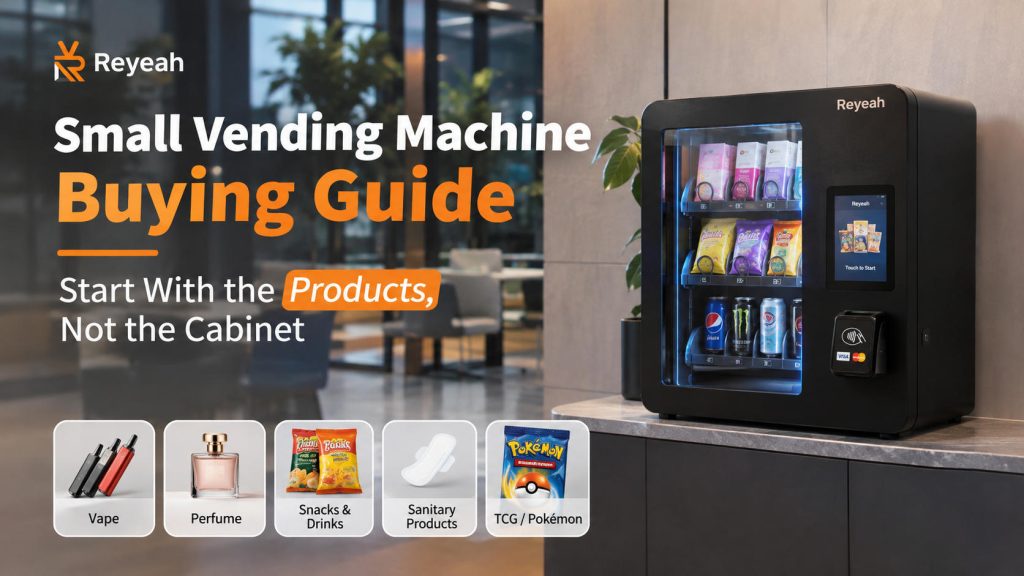
A small vending machine can fit neatly beside a reception desk and still be wrong for the job. The collection opening may crush a carton. The best-selling item may occupy a lane that holds only a day’s stock. A technician may need to pull the whole unit out just to replace a small component.
This small vending machine buying guide starts with the products you intend to sell, before screen sizes and cabinet finishes. Their packaging, storage requirements and expected demand should shape the specification.
Send samples that represent normal deliveries
A product’s listed dimensions are a starting point. Flexible bags bulge, cardboard tabs catch on dividers, and a hanging blister pack behaves differently from a rectangular box. Measure the widest points of the actual retail pack, including seals and protruding edges.
Send several samples from ordinary stock rather than one carefully selected unit. Include the lightest item, the heaviest item and the least rigid package. Ask the supplier to test them in the proposed mechanism and record both successful deliveries and failures.
A short video of one successful vend is useful evidence of movement, but it does not establish reliability. Request repeated tests at full, partly filled and nearly empty stock levels. Examine the packaging after delivery, not just whether it reached the collection area.
Check usable small vending machine capacity
“Up to 100 items” tells you little without a loading plan. Ask for a lane-by-lane layout showing the quantity of each proposed product. Then compare those quantities with the interval between visits.
Suppose a lane holds 18 units and you expect six sales per day. It offers roughly three days of stock before any allowance for unusually busy periods. A weekly refill schedule would not suit that lane, even if slower products elsewhere in the cabinet remained full. This is an illustrative planning example, not a sales forecast.
Capacity that cannot be allocated to the products customers actually want has limited value. Adjustable lanes help only if staff can change them reliably and the delivery mechanism still works after adjustment.
Measure the working footprint
The cabinet width is only part of the space requirement. Check the door swing, ventilation clearances, collection area and space needed to refill the unit. Measure the delivery route too: entrance doors, lifts, turns and steps.
For a wall-mounted model, obtain the loaded weight and the installation instructions. The installer needs to assess the wall and fixing arrangement. For a countertop model, check stability and the counter’s load rating. Neither format should be selected from an empty-machine photograph alone.
Confirm payment support for the destination
A reader fitted to a demonstration machine is not proof that the same setup will work in your country. Ask which payment provider will process transactions, who opens the merchant account, and which fees apply.
Separate the terminal cost from monthly software charges, connectivity costs and transaction fees. Ask what happens when a payment is accepted but delivery fails, and who can issue the refund. The screen, payment terminal and dispensing controller need to agree on the outcome.
Make maintenance part of the purchase
Find out how staff clear a jam, isolate a lane and replace common wear parts. Request a parts list, maintenance instructions and an explanation of remote support access. A low purchase price becomes less attractive if every fault requires an international shipment.
Before approving production, keep a signed specification with the tested products, loading plan, dimensions, power requirements and agreed payment configuration. If the stock changes later, repeat the relevant product tests.
For a project quotation, send the supplier your product samples, installation measurements and planned refill interval together. That gives both sides a much firmer basis for selecting a small or medium-sized machine.
For a configuration review, send your product dimensions and installation details with the proposed refill schedule.