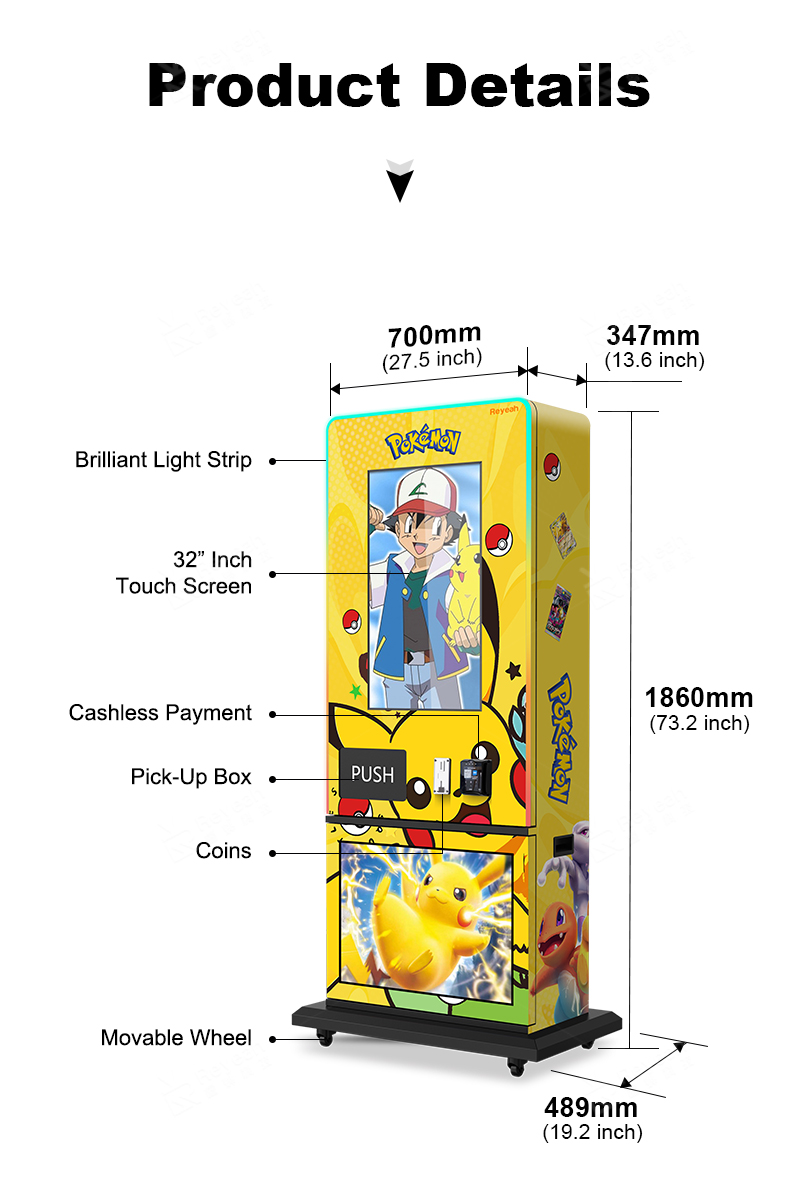
Product details
Why Pokemon Vending Machines Are Changing the Way Trading Cards Are Sold
For years, buying Pokémon cards followed a familiar routine. You went to a card shop, toy store or large retailer, looked through what was available and bought a few packs or boxes.
That model still works, but it is no longer the only way to sell trading cards.
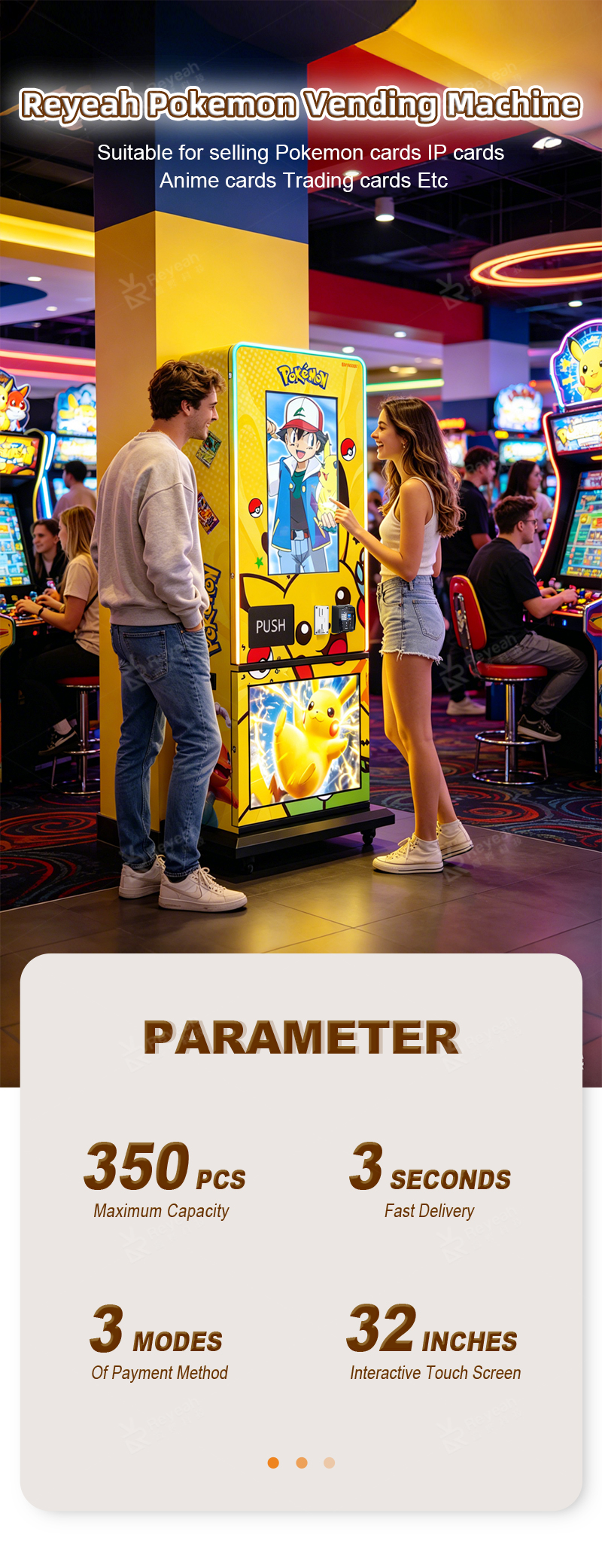
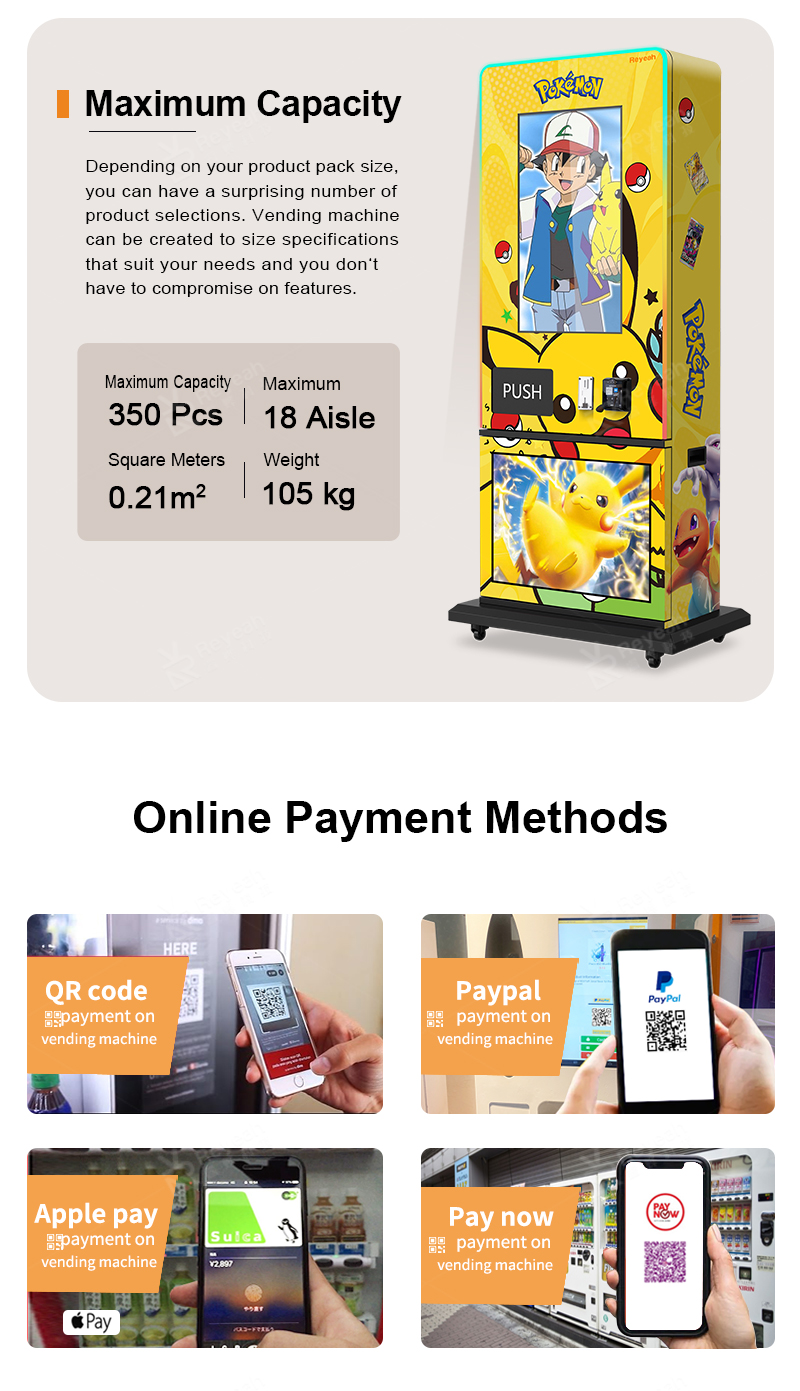
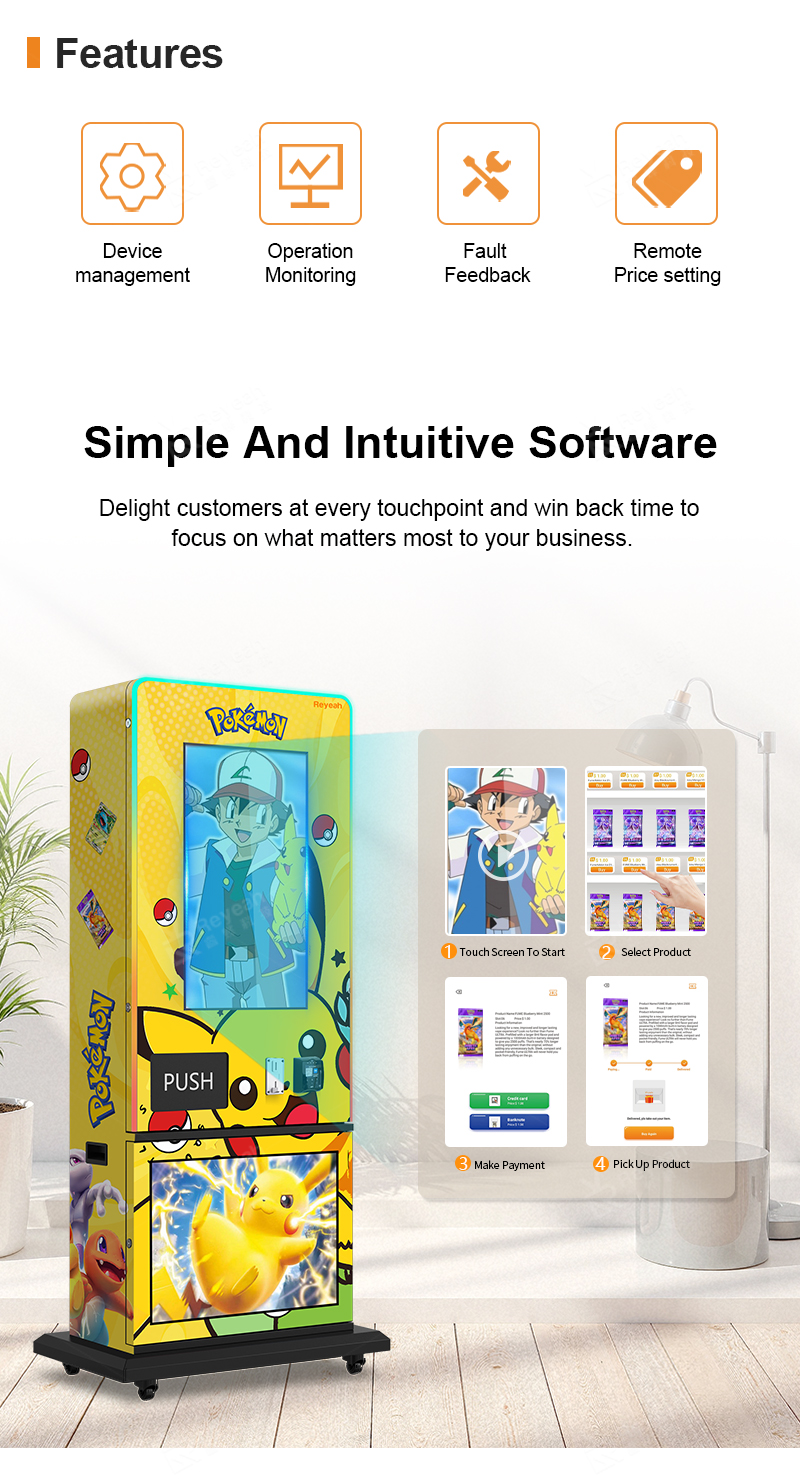
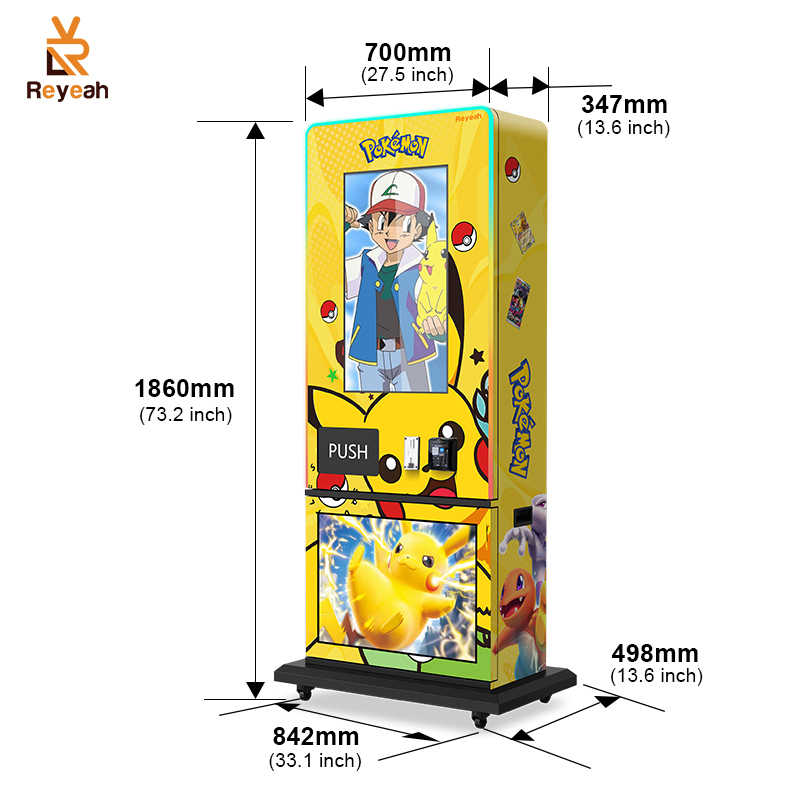
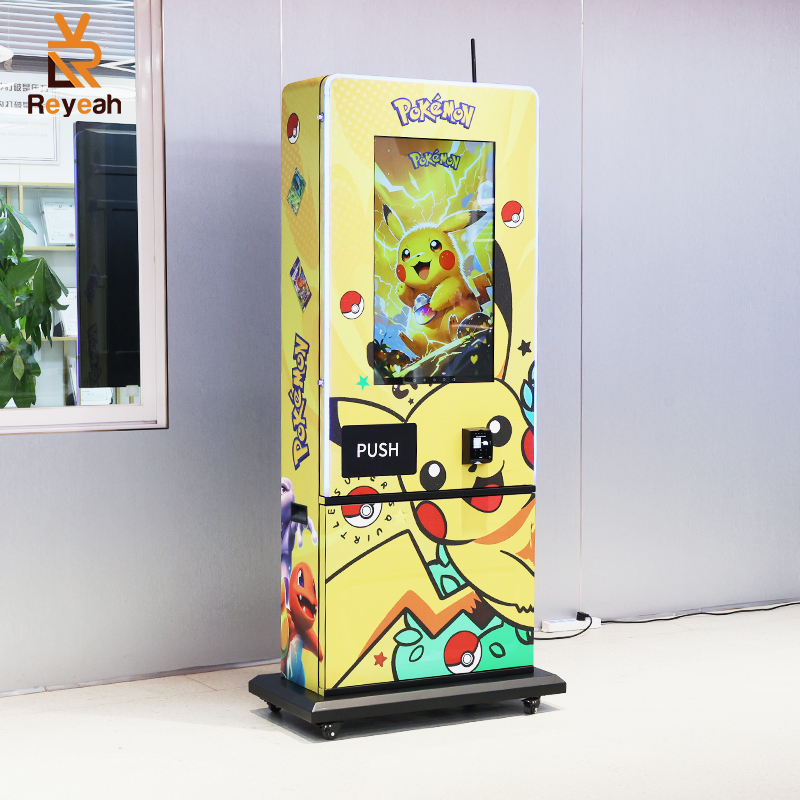
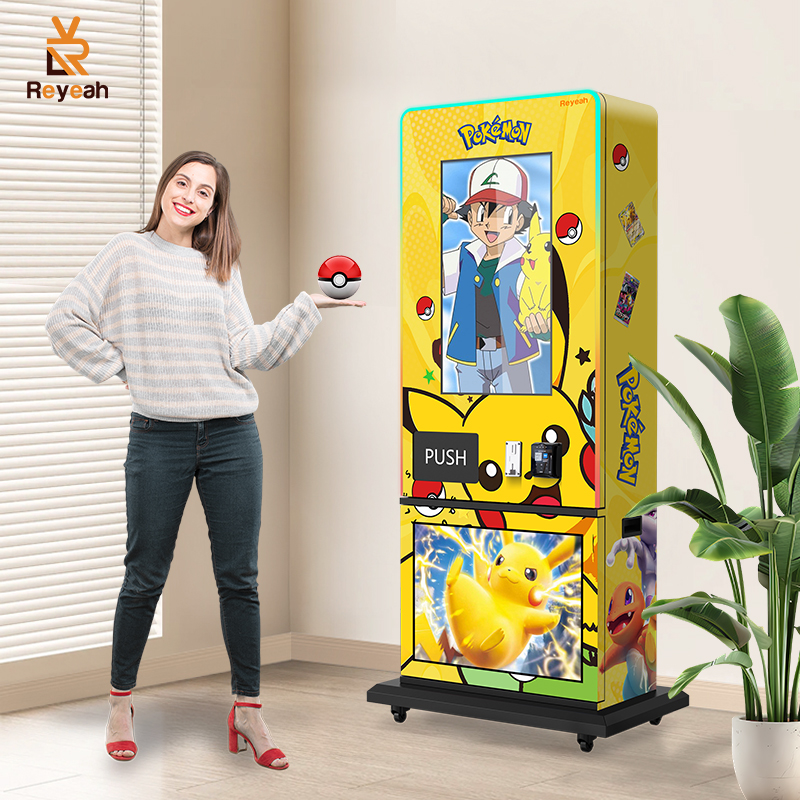
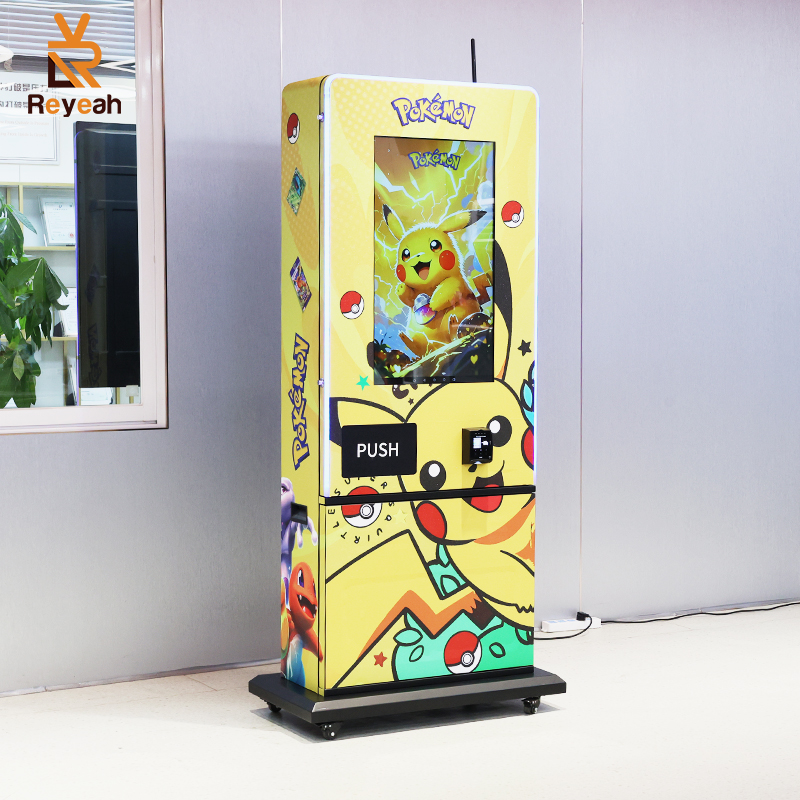
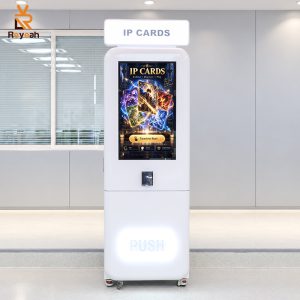
A Pokemon vending machine takes a product that already has a strong collector culture and puts it into a completely different retail format. Customers can see the available packs, make a payment and walk away with their cards in less than a minute.
The interesting part is not simply replacing a cashier with a machine. A Pokemon card vending machine changes when, where and sometimes why people buy cards.
Pokémon Cards Work Surprisingly Well With Vending
Not every retail product makes sense in a vending machine.
Trading cards have several characteristics that make them particularly suitable.
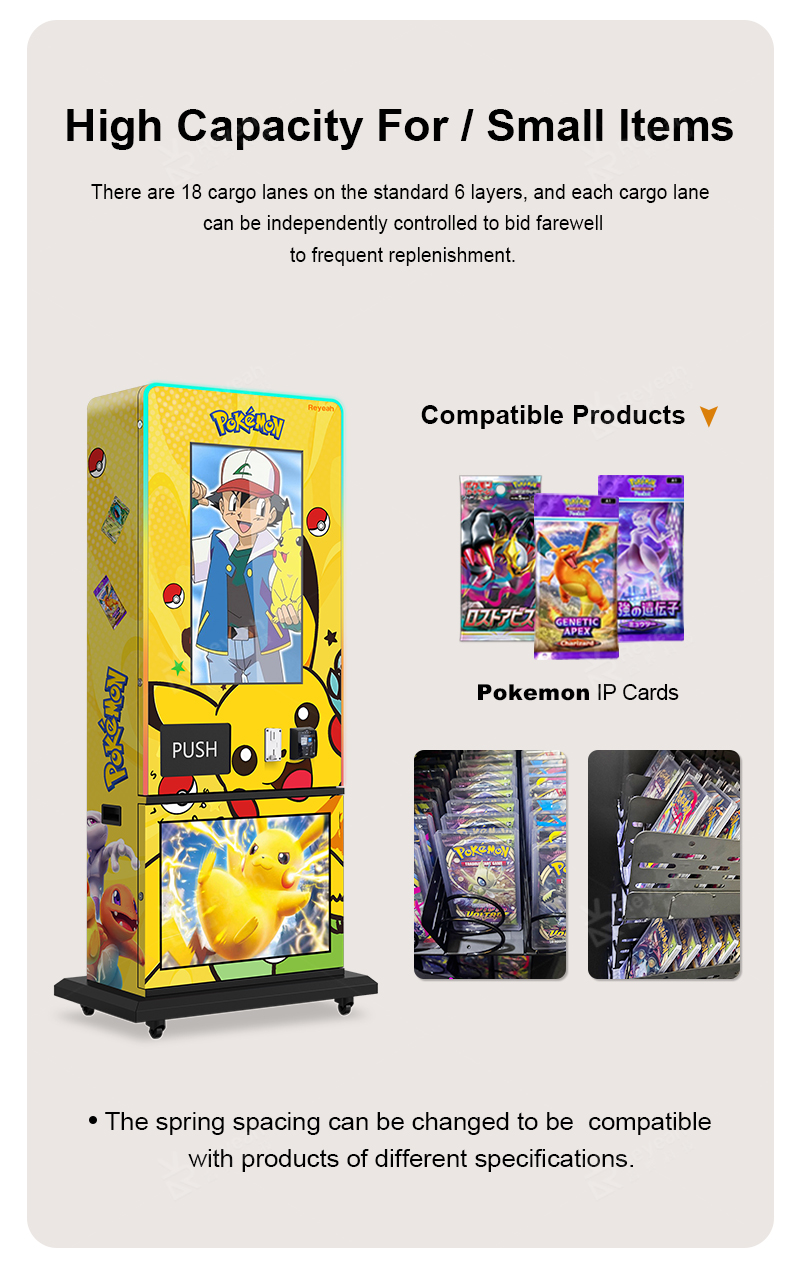
They take up very little space, yet their retail value can be relatively high. Hundreds of packs can be stored without requiring the floor space of a conventional store.
There is also very little explanation required before purchase. A collector who sees a familiar set normally knows what it is and how much he or she is prepared to pay.
This is quite different from products that require fitting, demonstrations or advice from a salesperson.
For many Pokémon products, the package itself does most of the selling.
That makes automated retail a natural fit.
The “One More Pack” Effect
There is another reason a Pokemon vending machine is different from an ordinary snack machine: opening packs is part of the experience.
Collectors are not simply buying pieces of cardboard. They are buying the possibility of finding a card they want.
That creates a very different buying pattern.
A customer may originally intend to purchase two booster packs. After opening them nearby, he may return to the machine and buy another pack. A group of friends may purchase cards together and compare what they pull.
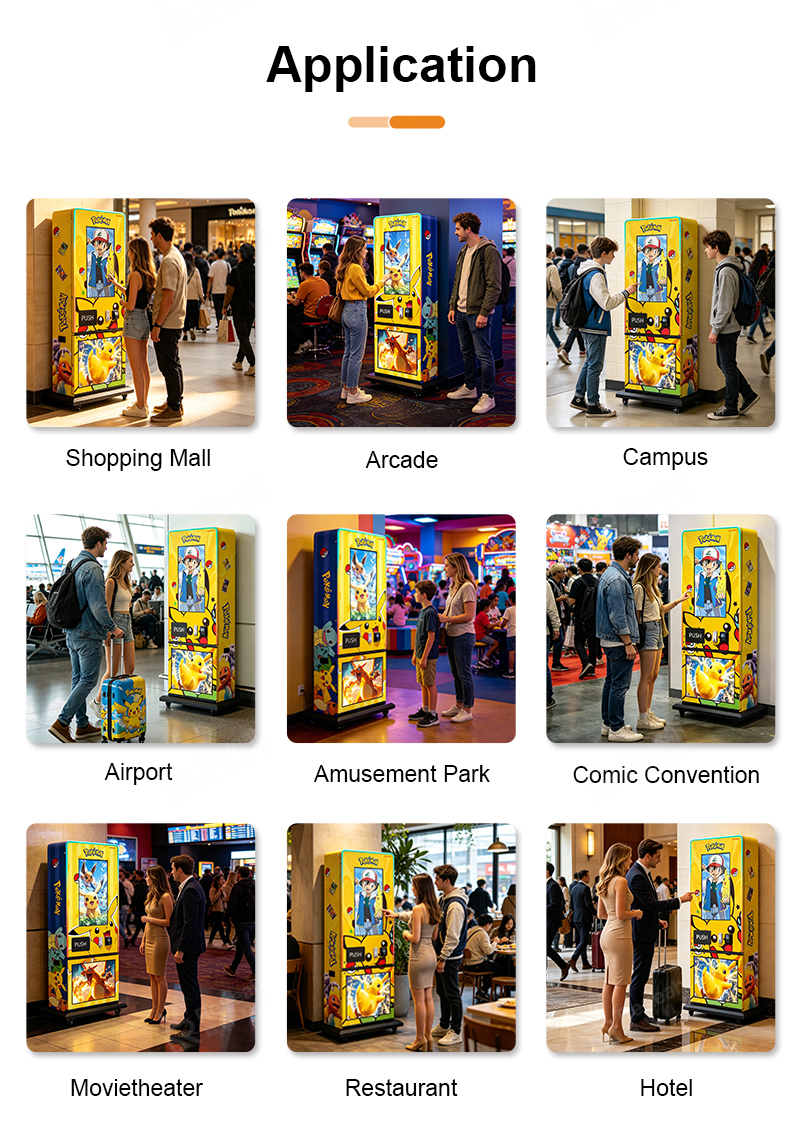
This behavior can be particularly noticeable in arcades, hobby stores, gaming venues and entertainment centers where customers are not in a hurry to leave.
The machine becomes part of the activity rather than simply a place to make a purchase.
New Set Releases Can Create Short-Term Traffic Spikes
Pokémon card demand is not constant throughout the year.
New releases matter.
When a new set becomes available, collectors often want to buy it quickly. That means operators should not treat the inventory inside a Pokemon card vending machine like traditional snack inventory.
The product mix may need to change frequently.
A machine filled with popular new releases can perform very differently from the same machine filled with products that collectors have already seen for months.
This also creates opportunities for promotion.
Operators can update the machine graphics or screen when a new series arrives:
NEW SET AVAILABLE NOW
That simple message gives existing customers a reason to check the machine again.
For operators with several machines, a new release can also provide useful information about which locations have the strongest collector communities.
A Vending Machine Can Be a Small Extension of a Card Shop
A Pokemon card vending machine does not necessarily compete with traditional card shops.
It can extend them.
Consider a local trading card store that already has regular customers but only operates from 10 a.m. to 7 p.m.
Instead of opening a second store, the owner could place a machine in another shopping center or entertainment venue.
The machine becomes a small satellite retail point.
Customers discover the business through the machine, while the store remains the place for higher-value products, singles, grading discussions, tournaments and community events.
The vending machine handles simple transactions. The store handles everything that benefits from human interaction.
For an established card business, this can be more practical than trying to duplicate the entire store experience in another location.
It Can Also Work as a Market Test
Opening a physical retail store involves a long list of commitments: rent, renovation, furniture, employees, utilities and inventory.
A Pokemon vending machine provides a much smaller way to test a market.
Suppose an operator is considering expanding into another area of the city.
Instead of immediately leasing a shop, a machine can be installed there first.
After several months, the sales data begins to answer useful questions.
Are people in this area actually buying trading cards?
Which price range sells best?
Are sales stronger on weekdays or weekends?
Do customers prefer individual booster packs or larger products?
A machine cannot answer every question about a market, but it can provide real purchasing data instead of relying entirely on estimates.
The Screen Is Valuable Retail Space
Modern vending machines often include a touchscreen, but many operators use it only for product selection.
That wastes part of its potential.
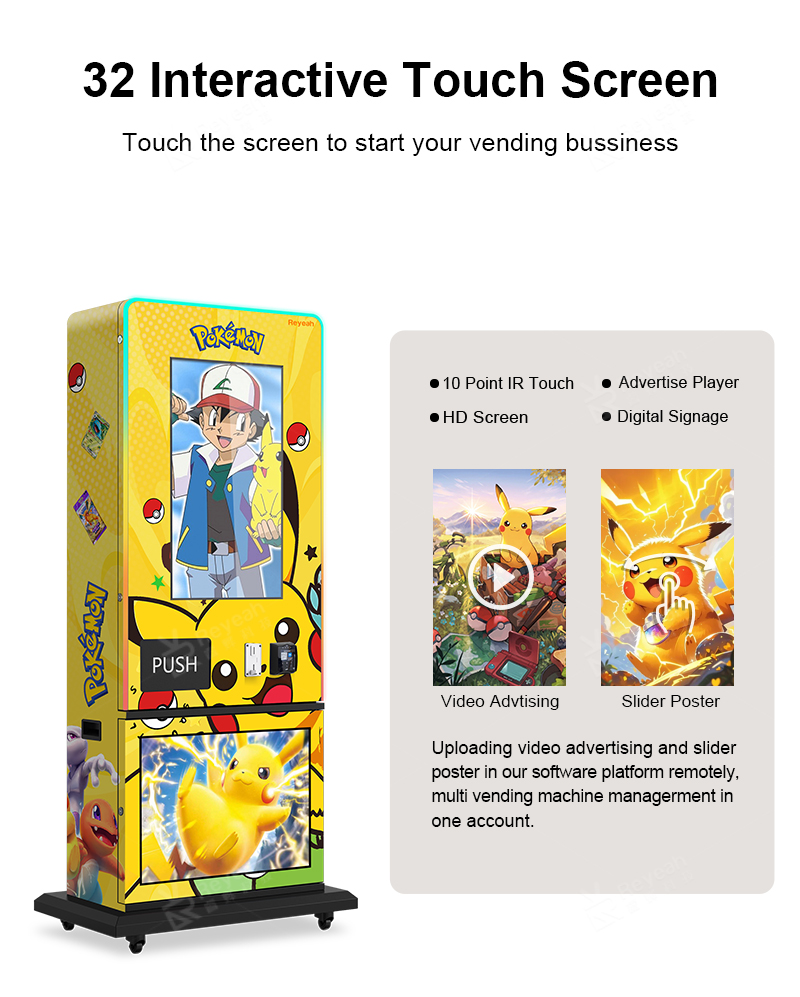
The display can also be used for promotions, new-product announcements, instructions and branding.
A card shop operating the machine could advertise an upcoming tournament. A vending operator could promote a newly arrived trading card series. The screen could also introduce other machines or locations operated by the same business.
This becomes more useful as the network grows.
Imagine a company operating 30 trading card vending machines across several shopping malls. Those 30 screens are also 30 small advertising displays that the operator controls.
The machine is therefore not only a sales terminal. It can become part of the operator’s marketing network.
Social Media Can Give the Machine a Second Life
Trading cards are highly visual products.
Collectors already post pack openings, rare pulls and new purchases on TikTok, Instagram, YouTube and other platforms.
A visually distinctive Pokemon vending machine fits naturally into this behavior.
Someone sees an unusual machine in a mall, records a short video, buys a pack and opens it on camera.
The operator receives exposure without purchasing that particular piece of advertising.
This is one reason the appearance of the machine deserves attention.
A plain cabinet may perform its basic function perfectly, but a machine that looks interesting enough to photograph can have additional marketing value.
Some operators can even add a QR code linking to their social account or store website.
The physical machine then becomes a bridge between offline traffic and online customers.
A Machine Network Produces Useful Sales Data
One machine provides sales.
A network of machines provides data.
Once operators have several locations, they can begin comparing performance.
Perhaps basketball cards perform better near a sports venue while Pokémon products dominate at a family entertainment center.
One mall may sell inexpensive booster packs quickly, while another location has more customers willing to purchase premium products.
These differences are difficult to understand if all machines are managed exactly the same way.
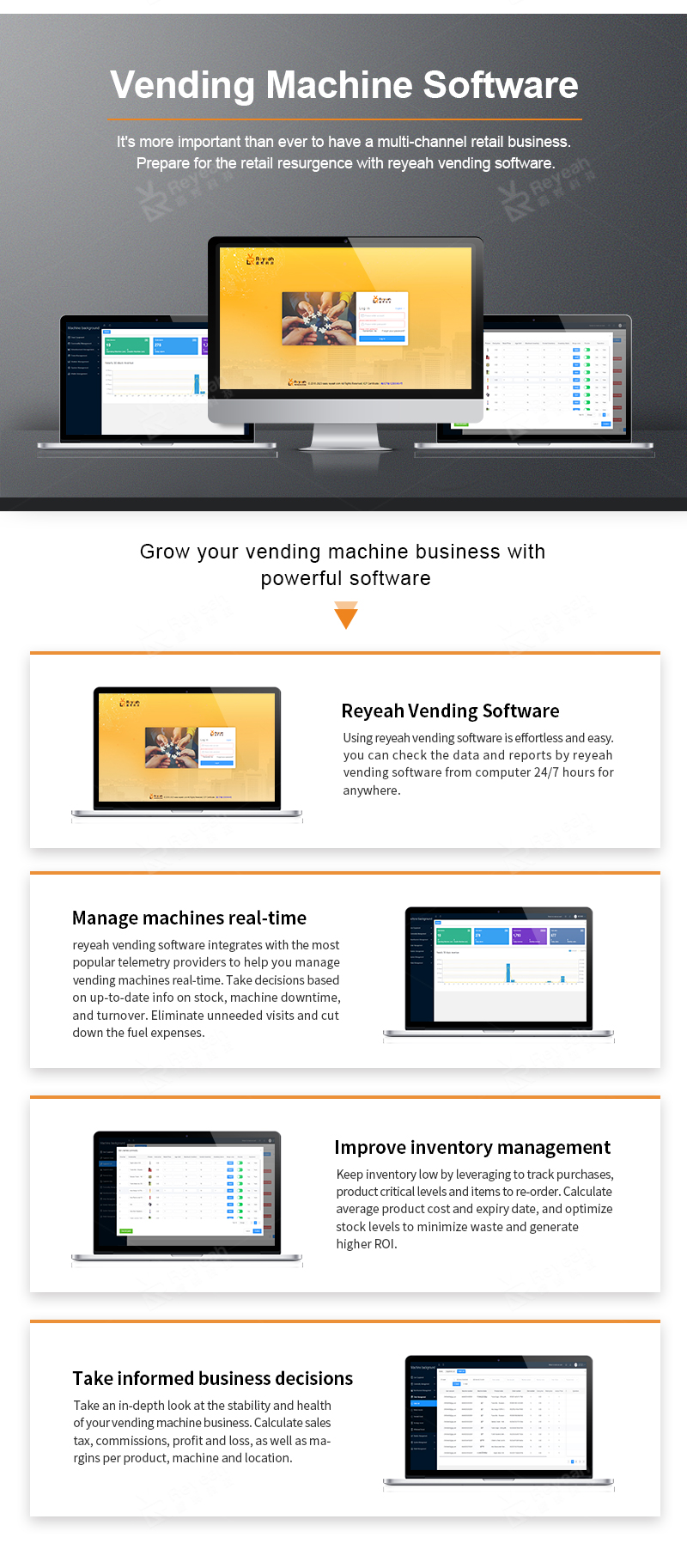
Remote management allows an operator to treat each location as its own small retail store.
Over time, inventory can be adjusted according to what actually sells there.
That is a much more efficient approach than putting the same products in every machine.
Small Products Leave Room for a Wider Product Mix
The internal space of a Pokemon vending machine can also be used creatively.
Pokémon cards may be the main attraction, but they do not necessarily have to be the only products.
Depending on the dispensing system, operators can consider related collectibles or accessories.
A trading card vending business could eventually include Pokémon booster packs, sports cards, other TCG products and selected card accessories.
This reduces dependence on a single release or product category.
It also allows operators to react to local demand. A machine near a sports venue could contain more sports cards, while one near a game store could focus heavily on TCG products.
The machine remains the same; the business inside it changes.
Product Authenticity Becomes Part of the Operator’s Reputation
There is one issue that matters particularly in collectible markets: trust.
Customers want to know that sealed products are genuine and have not been tampered with.
For an unknown vending operator, this reputation has to be built.
Clear company information, professional packaging, visible customer service details and consistent product quality can help.
Operators who already own a card shop have an advantage because customers may already recognize the business.
Independent vending operators should think about building their own brand rather than treating each machine as an anonymous box.
If customers have a good experience at one location, recognizing the same brand on another Pokemon card vending machine makes the second purchase easier.
The Machine Can Become a Brand, Not Just Equipment
This becomes especially important when expanding.
A business with ten generic vending machines owns ten machines.
A business with ten machines carrying the same name, visual identity and customer experience is beginning to build a retail brand.
The difference matters.
Operators can use consistent cabinet designs, logos, social accounts, QR codes and screen interfaces across different locations.
Customers may eventually recognize the machine before they even look at the products inside.
At that stage, the business is no longer simply “selling Pokémon cards from vending machines.”
It is operating an automated trading card retail network.
There Are Still Practical Problems to Solve
The concept sounds simple, but the details matter.
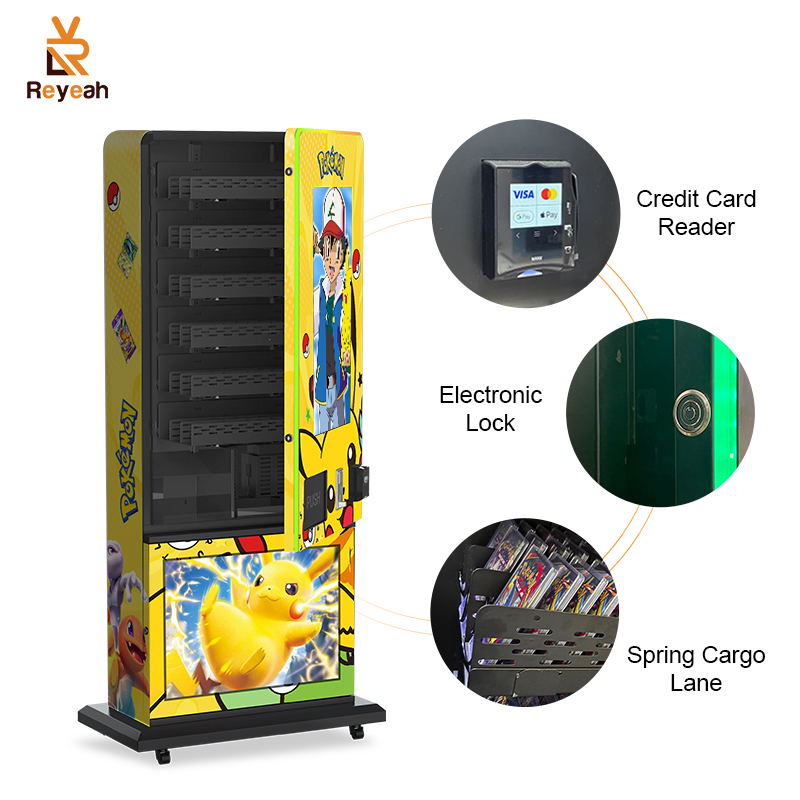
Trading card packs are thin, so dispensing reliability needs to be tested carefully. Different boxes have different dimensions. Payment terminals must work in the destination country. Machines carrying valuable inventory also need appropriate locks and anti-theft construction.
Inventory creates another challenge.
Popular releases can disappear quickly, while less popular products can occupy a slot for weeks.
The operator therefore needs to understand trading cards, not just vending machines.
Someone who knows how to maintain vending equipment but knows nothing about the TCG market may struggle with inventory.
Likewise, someone who understands Pokémon cards but ignores machine maintenance and payment systems may encounter a different set of problems.
Successful operation requires both sides.
What Happens When You Have 50 Machines?
This is where the business becomes more interesting.
With one machine, the owner can personally visit it and check what needs to be refilled.
With 50 machines, that approach becomes inefficient.
Inventory purchasing needs to be planned in larger quantities. Restocking routes need to be organized. Sales from different locations need to be compared. Faults need to be identified remotely whenever possible.
At the same time, scale can create advantages.
Larger operators may be able to purchase inventory more efficiently, negotiate better location agreements and move products between machines according to local demand.
A slow-selling product at one location does not necessarily have to be discounted immediately. It may simply need to be moved to another machine where demand is stronger.
The vending machine is only one part of the system. Logistics and inventory management become increasingly important as the business grows.
Where the Pokemon Vending Machine Concept Could Go Next
The next generation of Pokemon vending machines will probably do more than accept payment and dispense a pack.
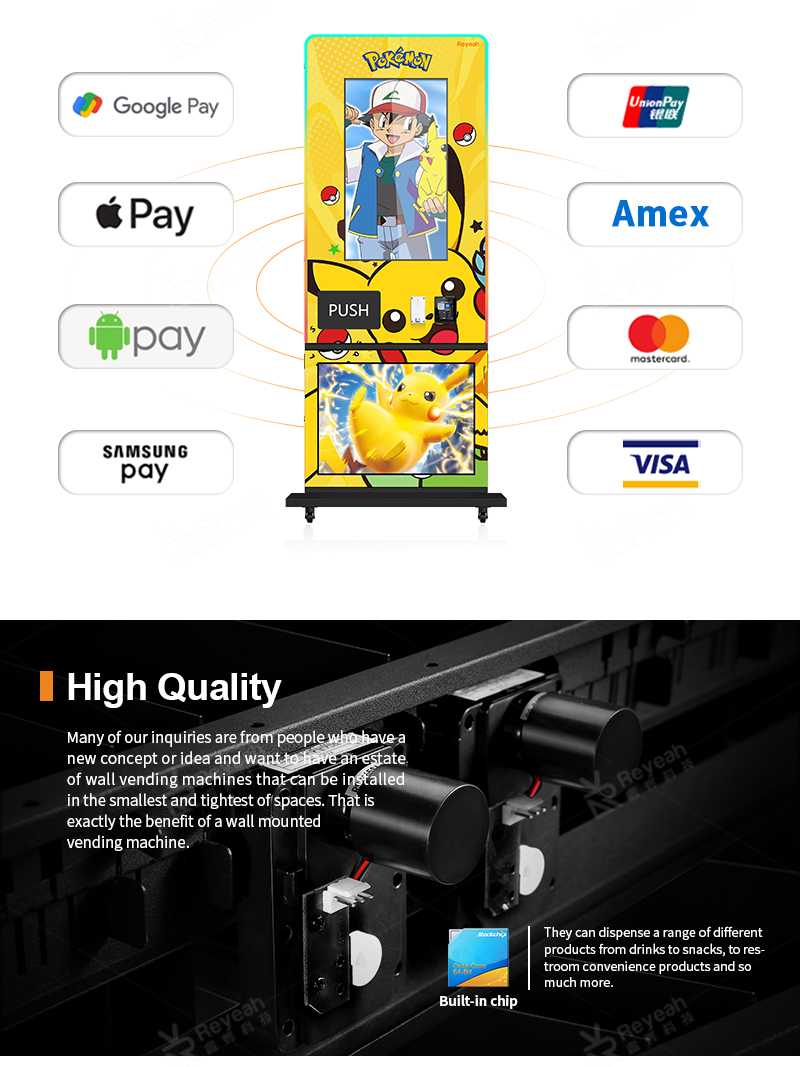
Remote inventory management is already becoming standard in many types of vending equipment. Larger touchscreens make promotions easier. Cashless payment reduces friction. Cloud-based management gives operators a better picture of what is happening at each location.
There is also room for the shopping experience itself to change.
Operators could run limited-time promotions, highlight new arrivals or change the products displayed on the screen without changing the physical machine.
For larger vending businesses, this makes each machine a remotely managed retail endpoint rather than a standalone piece of equipment.
More Than a Different Way to Sell Cards
The most interesting thing about a Pokemon vending machine is not that it can sell Pokémon cards without a cashier.
Vending machines have been doing unattended retail for decades.
What makes the concept interesting is the combination of a collectible product, impulse purchasing, small product dimensions, strong repeat demand and a customer base that is already active online.
For an existing card shop, a machine can extend sales beyond the store.
For a vending operator, it can open a product category with very different economics from drinks and snacks.
For a new business, it can provide a relatively compact way to test locations before making larger retail investments.
And if several successful locations can be repeated, a single Pokemon card vending machine can eventually become the starting point for a much larger automated trading card business.